 f2760fdf33
* feat(landing): add curated Codex design collection under /plugins

Add a standalone /plugins/codex-design/ collection of the best real,
external skills for doing design with OpenAI Codex (openai/skills,
MengTo/Skills), positioning Open Design as the home for designing with
Codex and driving to the client download + the awesome-codex-design list.

- New collection page + 6 flagship skill detail pages (+ locale wrappers)
- Featured Codex design banner on the /plugins hub
- Editorial content in _lib/codex-design.ts (every entry links to source)
- On-brand illustrations (Figma-selection language) for hub cover, hero,
  and each skill

English baseline; per-locale copy layered in a follow-up.

* fix(landing): center Codex design collection + kill oversized section gaps

The collection page rendered full-bleed against the left edge and the
global `section { padding: 130px 0 }` rule blew the vertical gaps wide
open on both the collection and detail pages. Constrain the collection
to the shared 1180px safe area, neutralize the section padding on both,
and de-duplicate the hero eyebrow.

* style(landing): align Codex design collection to the site's editorial card DNA

The collection reinvented a soft, rounded, coral-accented card style that
clashed with the rest of /plugins/*. Rebuild it on the established
system: reuse the tpl-card DNA (1.5px ink border, hard offset hover
shadow, media bleed, mono uppercase labels, dark full-width CTA), the
shared .plugins-* hero primitives, and the ink/bone palette. Move the
skill grid to a global .codex-skill-grid (a scoped rule failed to apply),
fix the cramped detail-page related cards to full tpl-cards, drop the
off-palette coral from UI chrome, and de-duplicate the hero eyebrow.

* style(landing): make Codex design skill grid 4-up

Denser 4-column grid (was 3), matching the plugin hub's explore grid;
detail-page related row stays 3-up. De-dup the hero eyebrow.

* style(landing): regenerate Codex design illustrations brighter and punchier

The first pass read washed-out and samey at card size. Regenerate all
eight (hub cover, hero, six skill covers) with vivid acid-green + coral
accents, higher contrast, and crisp ink outlines so the covers pop in
the 4-up grid and match the site's acid-green accent.

* feat(landing): curated Codex design plugin catalogue (50 entries)

Rebuild the /plugins/codex-design collection from 6 placeholder entries into
50 curated, real, installable design skills and plugins for Codex and other
coding agents.

Each entry carries copy grounded in the upstream SKILL.md, its source repo,
star count, licence, a Codex-compatibility note, and a traction signal
(GitHub stars plus X/YouTube), cross-checked across GitHub, X and YouTube.

- 50 flat /plugins/<slug>/ routes with per-locale wrappers (11 locales)
- 50 covers: 14 upstream first-party showcase images, 36 generated
- collection page gains a category filter; detail card shows stars, traction,
  and a bundle note for multi-module entries
- 13 generic sub-command names disambiguated as 'Parent - Subname'
- full 11-locale localisation of UI and all 50 bodies
- README refresh plus new hero for the codex-design repo lives separately

Licence discipline: openai/skills (no root LICENSE), anthropics/skills (no
LICENSE), MengTo demo imagery (third-party sourced) and design-dna imagery
(real third-party sites) were all excluded.

* chore(landing): trigger landing CI (no-op comment)

* fix(landing): address review on the Codex design catalogue

Copilot review follow-ups:
- drop the committed GitHub repo-stats snapshot (data, lib, and fetch
  script). It carried an openai/skills row that contradicted the stated
  licence discipline, and a checked-in stats file goes stale silently.
  The detail card now shows only the star count that lives with the
  catalogue entry itself.
- remove the unused sourcePath frontmatter local (dead code).
- drop the .codex-related .codex-skill-grid override; the related row
  renders under .dbrelated, so the selector never matched.
- the filter chip bar is a plain filter, not a tab set: role=group
  instead of role=tablist, which promised tab semantics the buttons
  never implemented.
- fix the stale route in the hallmark page header comment.
- delete the detailForks / detailContributors / detailUpdated i18n keys
  that the removed stats card was the only consumer of.

* style(landing): let the source card stat row flow by column

The row now carries a single stat, so a fixed three-track grid was
describing a layout that no longer exists.

* fix(landing): stop tracking the landing-page node_modules symlink

A local symlink named node_modules was committed with the catalogue: the
root ignore rule is `node_modules/`, and a trailing slash matches only
directories, so a symlink of that name slipped past it. It pointed at an
absolute path on the author's machine, so every CI job died in setup —
pnpm cannot mkdir through a dangling link:

  ENOENT: no such file or directory, mkdir '.../apps/landing-page/node_modules'

Untrack it and drop the trailing slash so the rule covers a file or
symlink of that name too.

* fix(landing): drop the Figma category and announce the active filter

Review follow-ups on the Codex design catalogue:

- The catalogue has no plugin that reads Figma. The official Figma
  skills are excluded on licence grounds, so the sole entry filed under
  "Figma to Code" was image-to-code, an image-first workflow that
  generates its own reference images and never connects to Figma. The
  chip therefore promised "read a real Figma design" and led to a
  plugin that cannot do it. Move that entry to Frontend & UI, drop the
  category from the union type, the filter, and the copy, and reword the
  lede and intro from three jobs to two.
- Announce the filter state: the selected chip lived only in the visual
  is-on class, so a screen reader heard plain buttons and could not tell
  which filter was active. Initialise aria-pressed and keep it in step
  with is-on in the click handler.
- The locale files still advertised the old "6 plugins / 3 workflows"
  figures from the six-entry version; correct them to 50 and 13 across
  all ten.

* fix(landing): put the catalogue's source-card prose into English

Follow-ups from the second review pass:

- codexNote, social, and bundle are rendered verbatim by the detail
  template, but 57 of those values were written in Chinese, so English
  and every other locale showed strings like 'README 提 Codex ×8' on the
  source card. Translate them in place; the data module is the English
  source these pages fall back to.
- The plugin hub banner still sold 'Figma pipelines' in all eleven
  locales after the category was dropped. Reword it to match.
- The jobs band allocated three fixed desktop columns and now holds two
  entries, leaving an empty third. Flow one equal column per category so
  the band tracks whatever CODEX_COLLECTION.categories holds.

* fix(landing): name the catalogue cover links for screen readers

The cover image is decorative (alt=""), so the only text left inside
each card's media link was the category chip: all 37 frontend covers
announced as "Frontend & UI" and all 13 system covers as "Design
Systems", with no way to tell which plugin a link opened. Label each
link with the localized skill name, matching what the shared
template-card already does, on both the collection grid and the related
row of the detail page.

---------

Co-authored-by: Joey <236967869+joeylee12629-star@users.noreply.github.com>
Open Design: The open-source Claude Design alternative
🔥 Open Design 0.13.0 — Stay in Flow is here. Long design sessions used to break on every interruption — a run lost its place, a model picker made you guess, an export needed one more detour. 0.13.0 keeps the session alive: resume Codex / OpenCode / Pi / Open Design Cloud runs across turns, pick the right model faster, and hand off screenshot-backed PPTX / PDF without leaving the app. Download 0.13.0 · Release notes
⚡ Open Design Cloud — the official model service. One recharge to use GPT, Claude, Gemini, and DeepSeek inside Open Design: 20+ flagship models, zero config, billed by real token usage. Try Open Design Cloud
🏅 The Open Design Fellow program is now open. If you also believe design should be open — become an Open Design Fellow, shape the product alongside the core team, and help more people take part in defining the future of design. Details →
MAINTAINERS.mdand Discord.
Website · Download · Open Design Cloud · Discord · Follow @OpenDesignHQ



English · Español · Português · Deutsch · Français · 简体中文 · 繁體中文 · 한국어 · 日本語 · العربية · Русский · Українська · Türkçe · ภาษาไทย
What is Open Design
🎨 The open-source Claude Design alternative. 🖥️ Local-first native desktop app for macOS and Windows. ⚡ Composable skills, brand-grade DESIGN.md design systems, and ready-to-use plugins. 🖼️ Generates web · desktop · mobile prototypes, live dashboards / artifacts, decks, images, video, plus HyperFrames motion graphics. 🔒 Sandboxed iframe preview · HTML / PDF / PPTX / MP4 export. 🤖 Runs on Claude Code · OpenClaw · Codex · Cursor · OpenCode · Qwen · Copilot · Amp · Hermes · Kimi · Antigravity and 25 distinct local CLI executables, or any OpenAI-compatible endpoint via BYOK.
Open Design is what you get when the agent-native loop Anthropic shipped with Claude Design — discover the brief, lock the direction, stream the artifact, critique, deliver — stops being closed and becomes a filesystem of functional skills, rendering design templates, design systems, and plugins that the coding agents already on your laptop can read, write, and remix. Your CLI becomes the design engine, your laptop becomes the studio, and your team's DESIGN.md becomes the brand contract.
It's also the Figma alternative for the agent era — instead of pushing pixels on a canvas, it delivers single-page artifacts in real CSS, real fonts, real components, exported straight to HTML / PDF / PPTX / MP4 — already shaped by your design system, already runnable inside the agent you use every day.
Product tour
A quick look at what Open Design is and what it does. Start from Home, orchestrate repeat workflows with Automation, distill a brand contract in Design System, and extend with Plugins and integrations; inside any project's Studio, the same design system streams out prototypes, live artifacts, HyperFrames, decks, and images.
Core pages
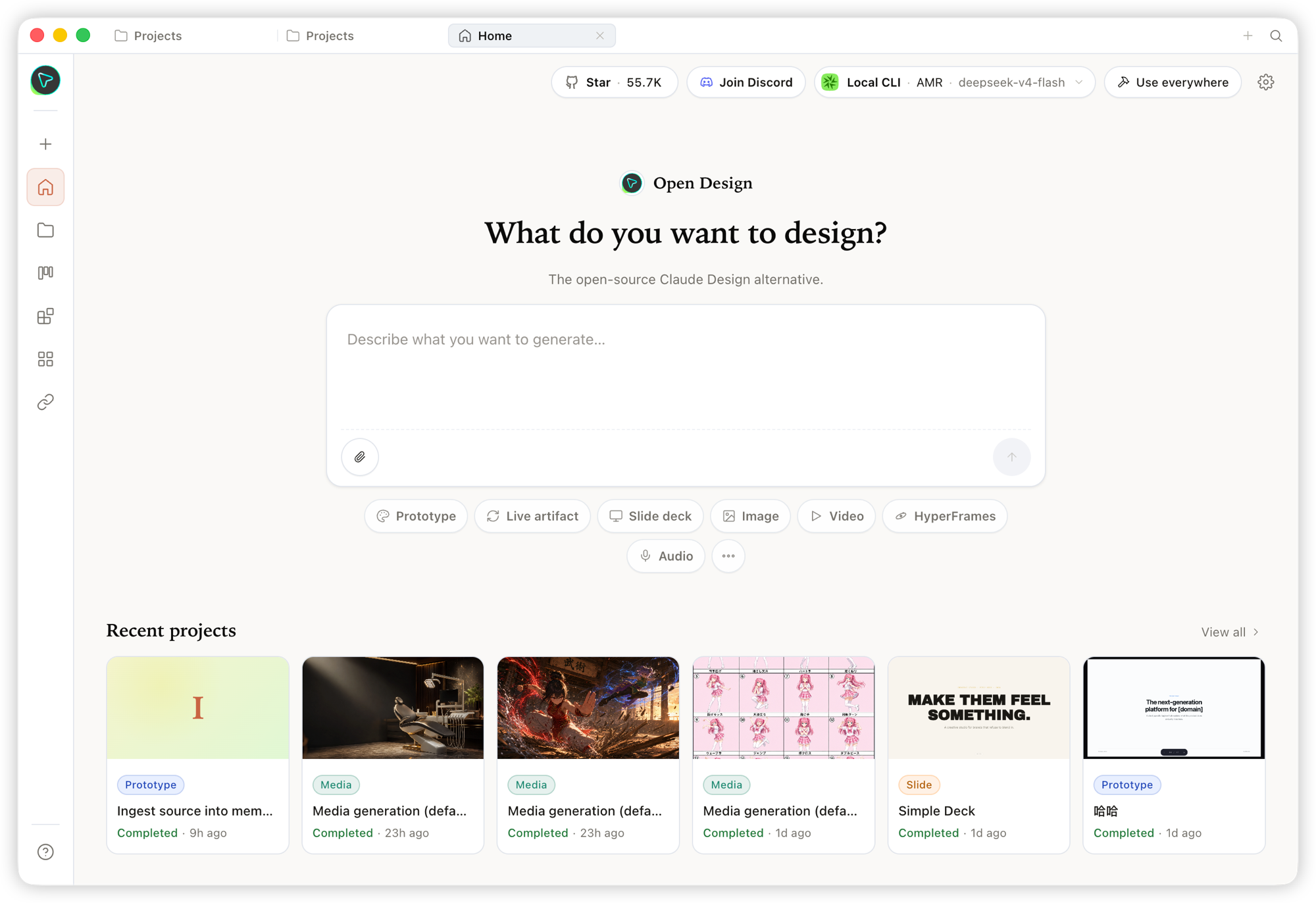 Home — the overview entry point. Pick a skill and a design system, type the brief, and kick off everything from one place. |
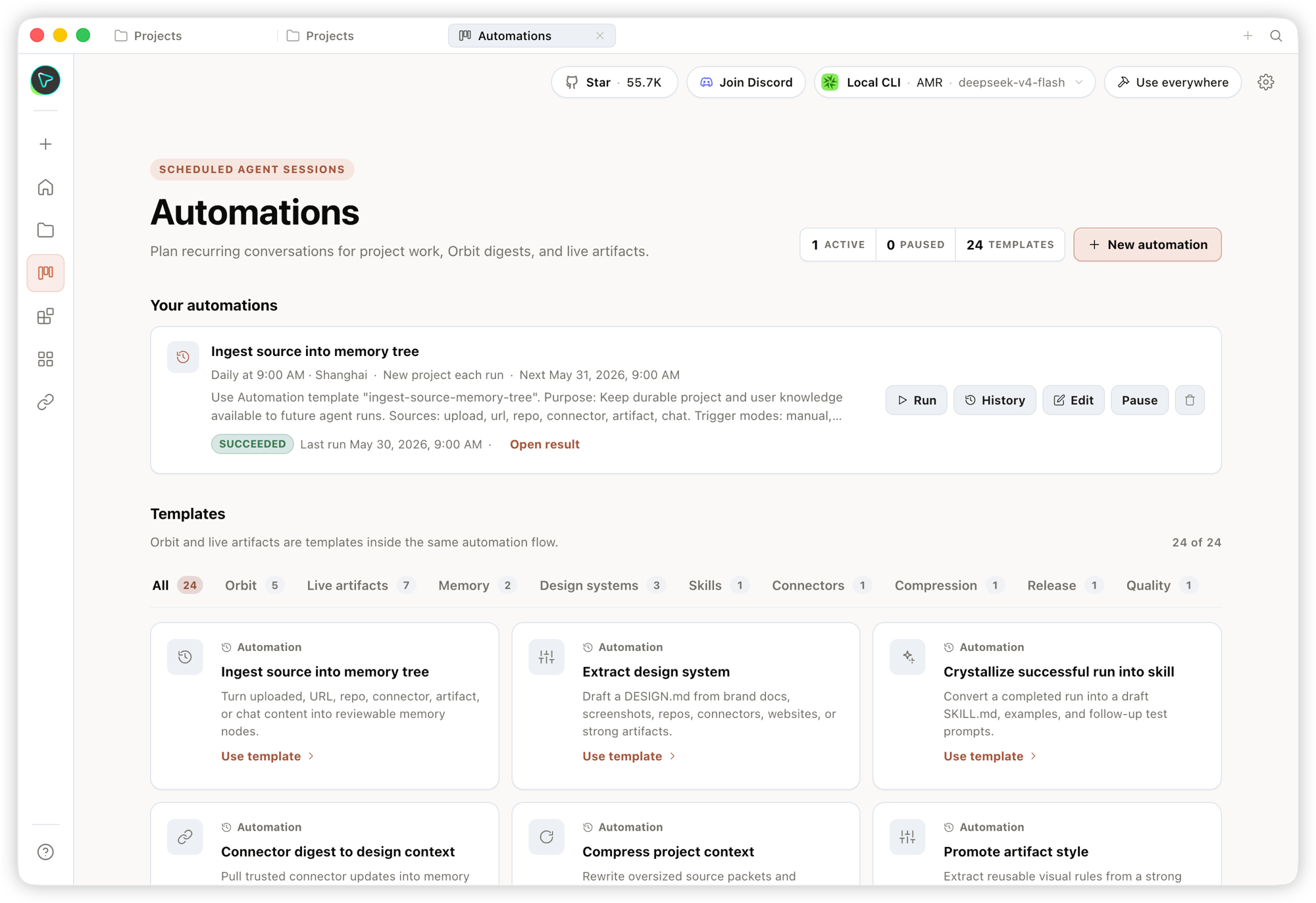 Automation — orchestrate repetitive design workflows into reusable, schedulable automations. |
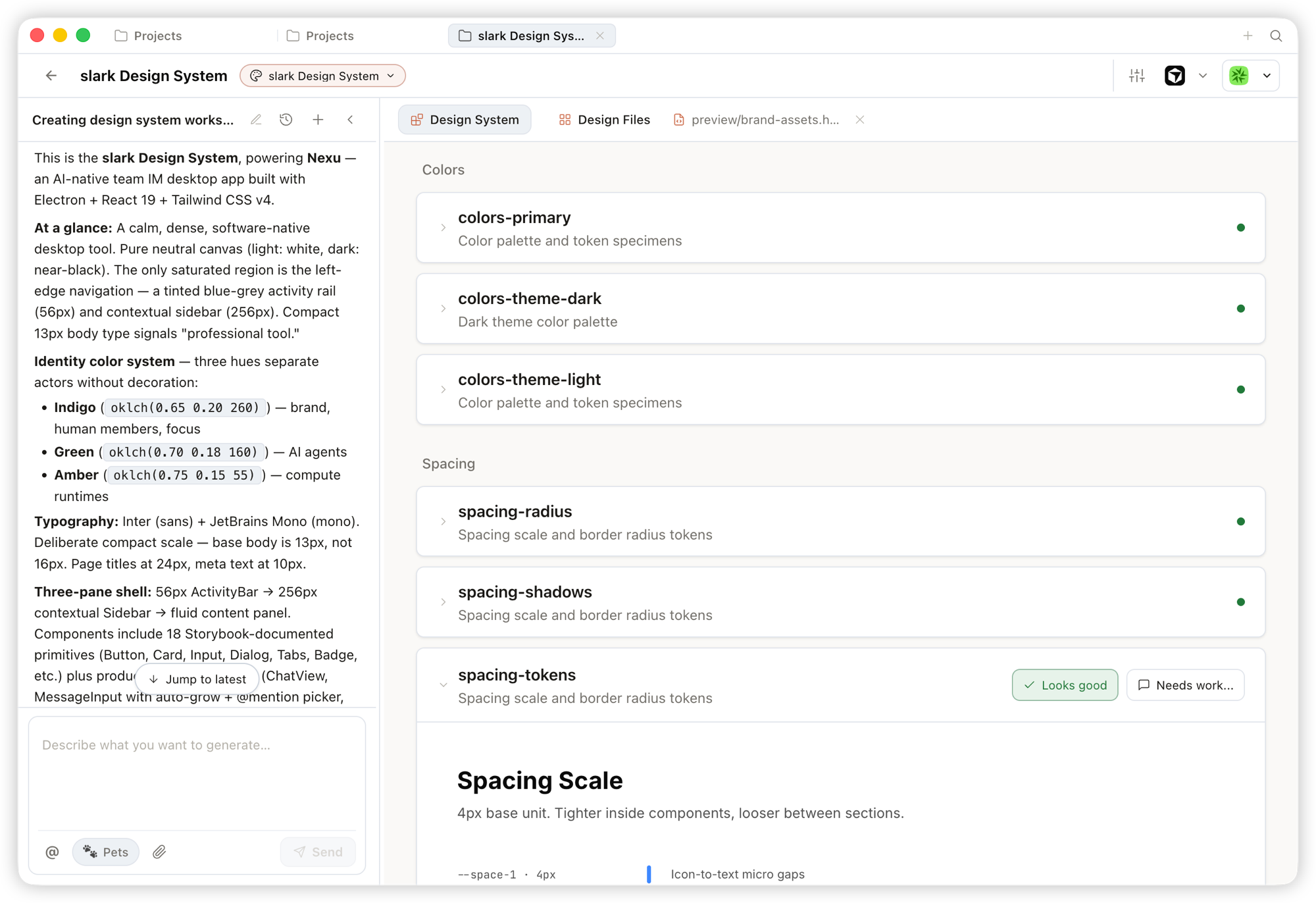 Design System — distill your team's DESIGN.md into a brand contract that shapes every output.
|
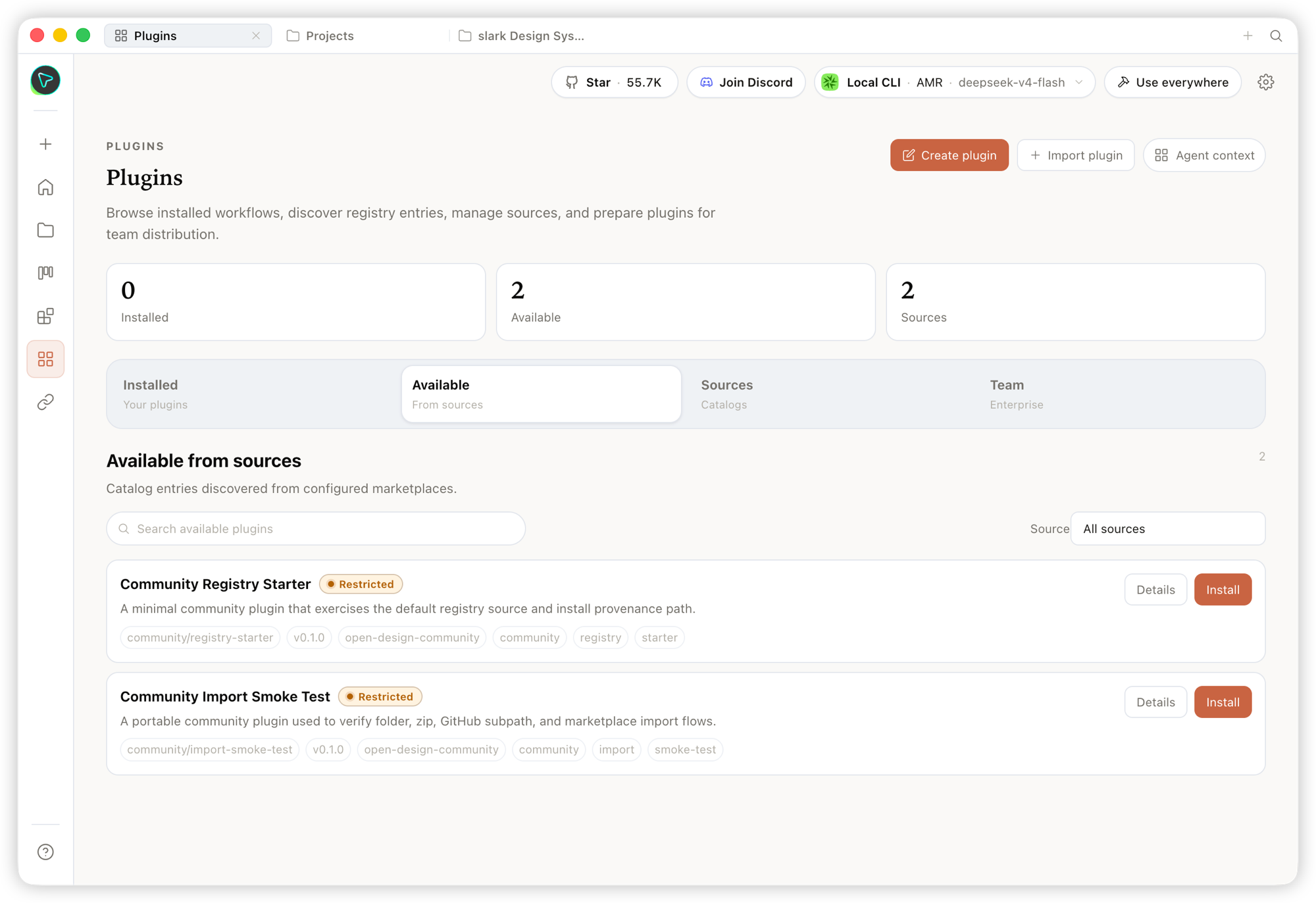 Plugin — browse, install, and distribute workflow plugins to extend generation on demand. |
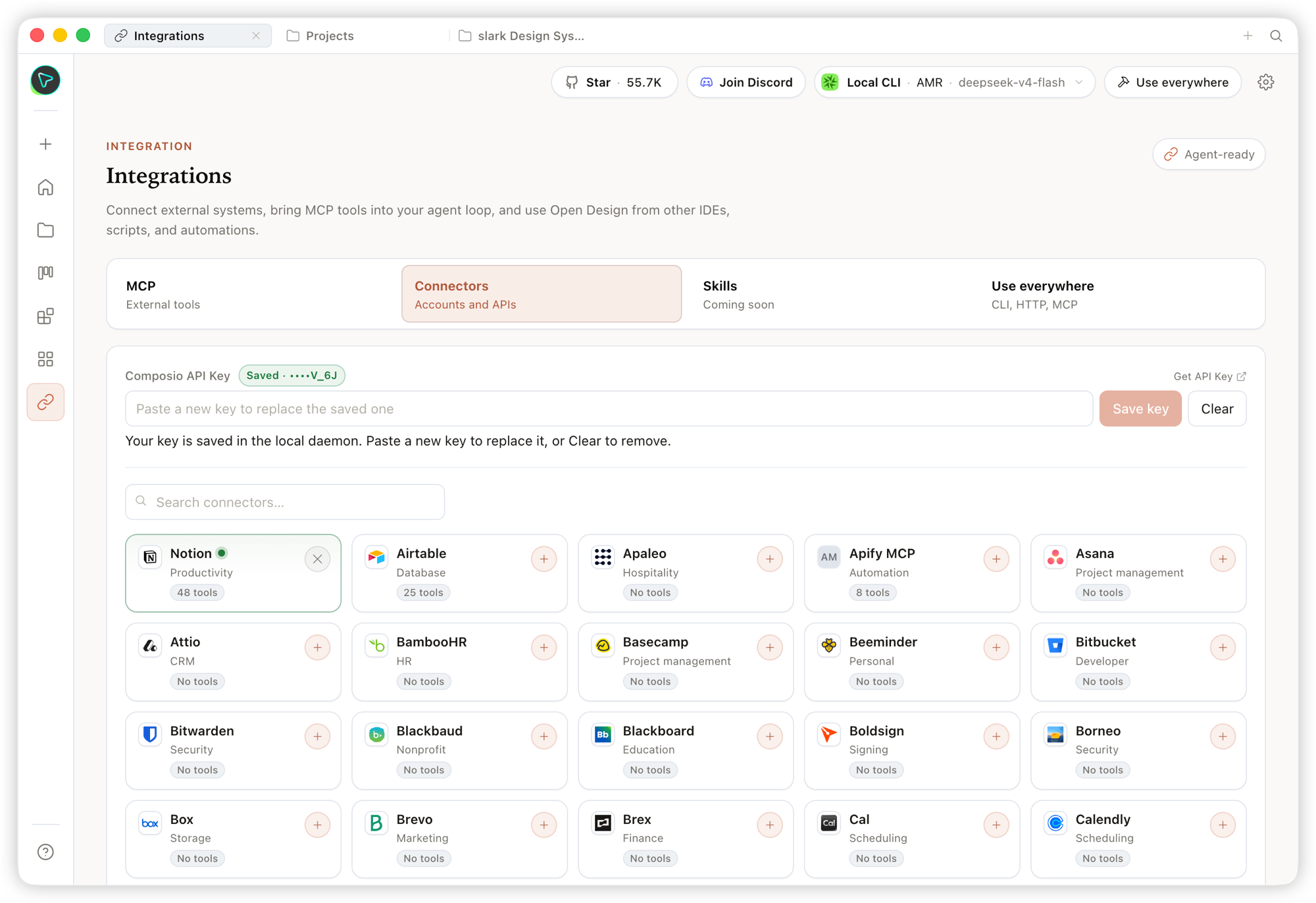 Integrations — connect external systems and MCP tools, and use Open Design from any IDE, script, or automation. |
Studio — many artifact types in one project
Inside a project's Studio, the same design system streams out multiple artifact types:
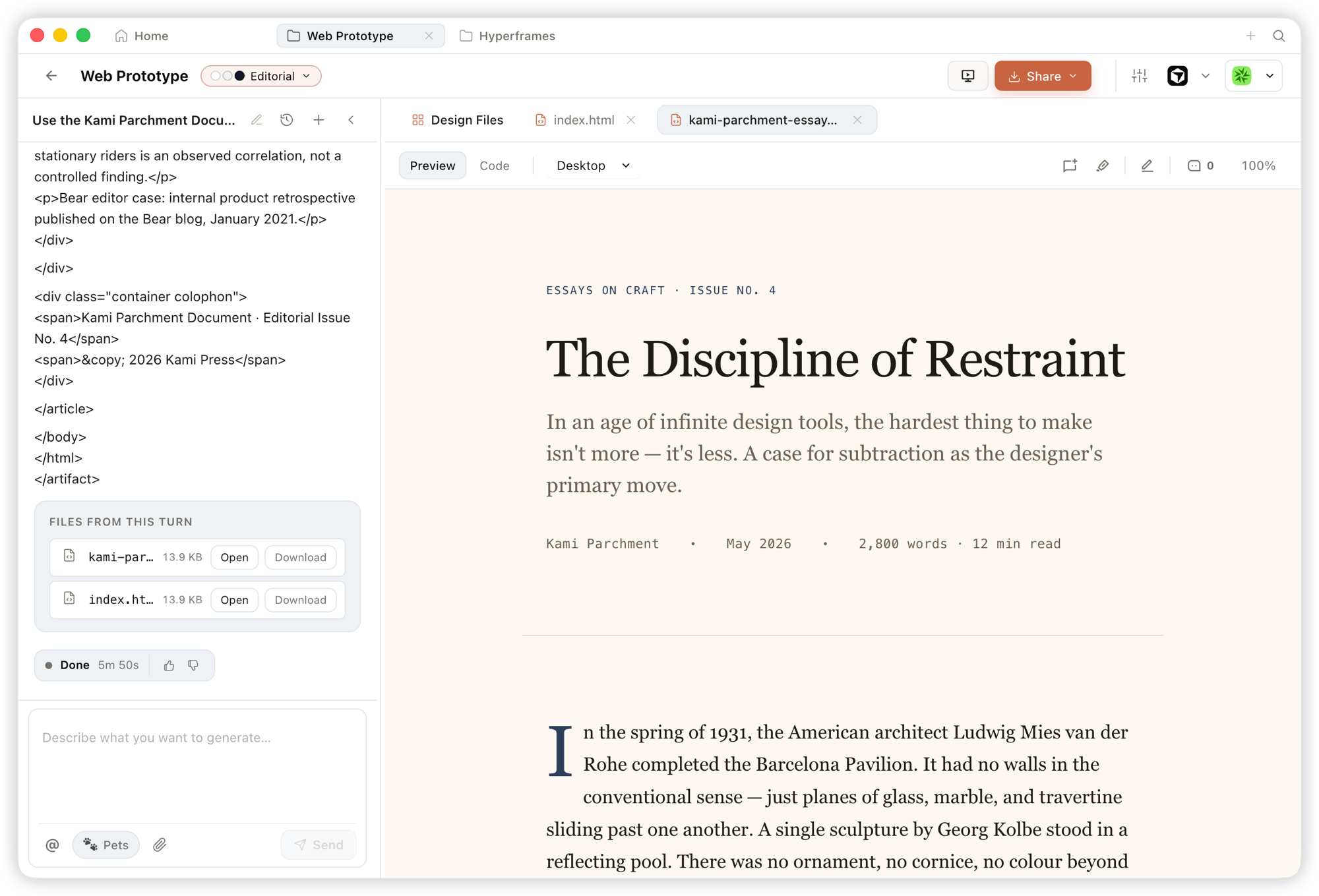 Prototype — single-page HTML artifacts that read your design system and render in a sandboxed iframe, previewable instantly and downloadable as source. |
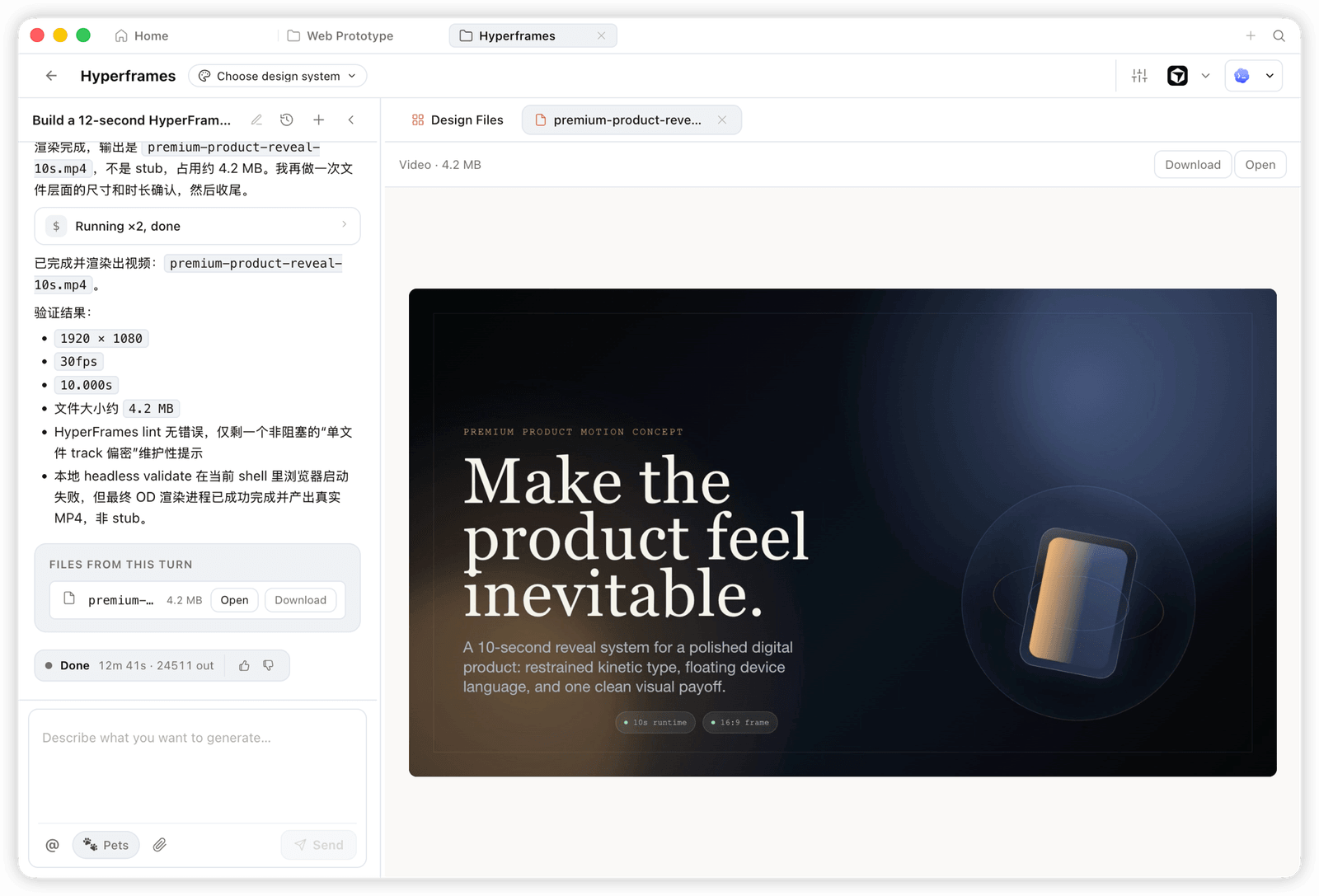 HyperFrame — programmatic motion and animated graphics, rendered to a real MP4 (e.g. 1920×1080 · 30fps). |
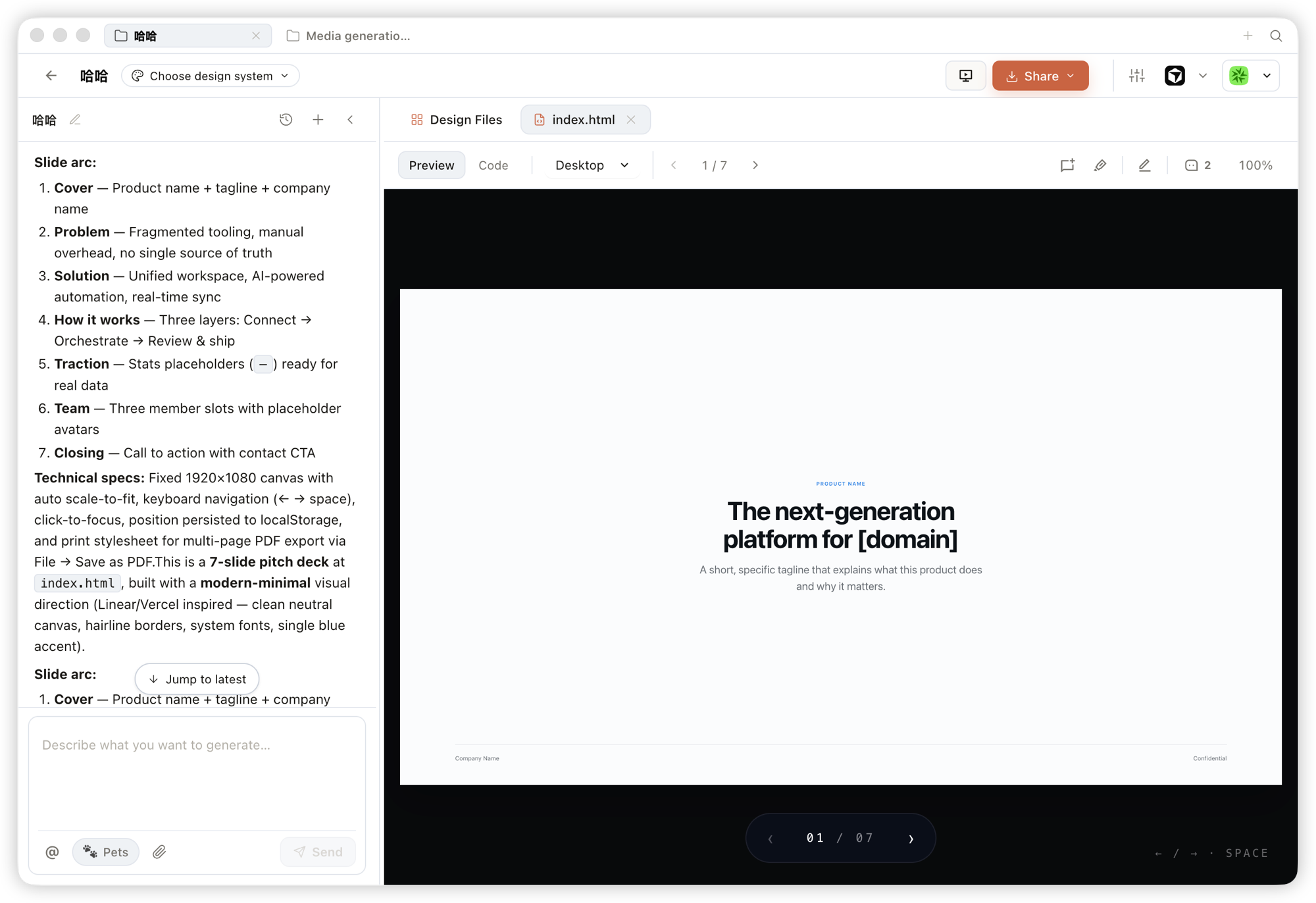 Deck — pitch decks you can page through, navigate by keyboard, and export to PPTX / PDF. |
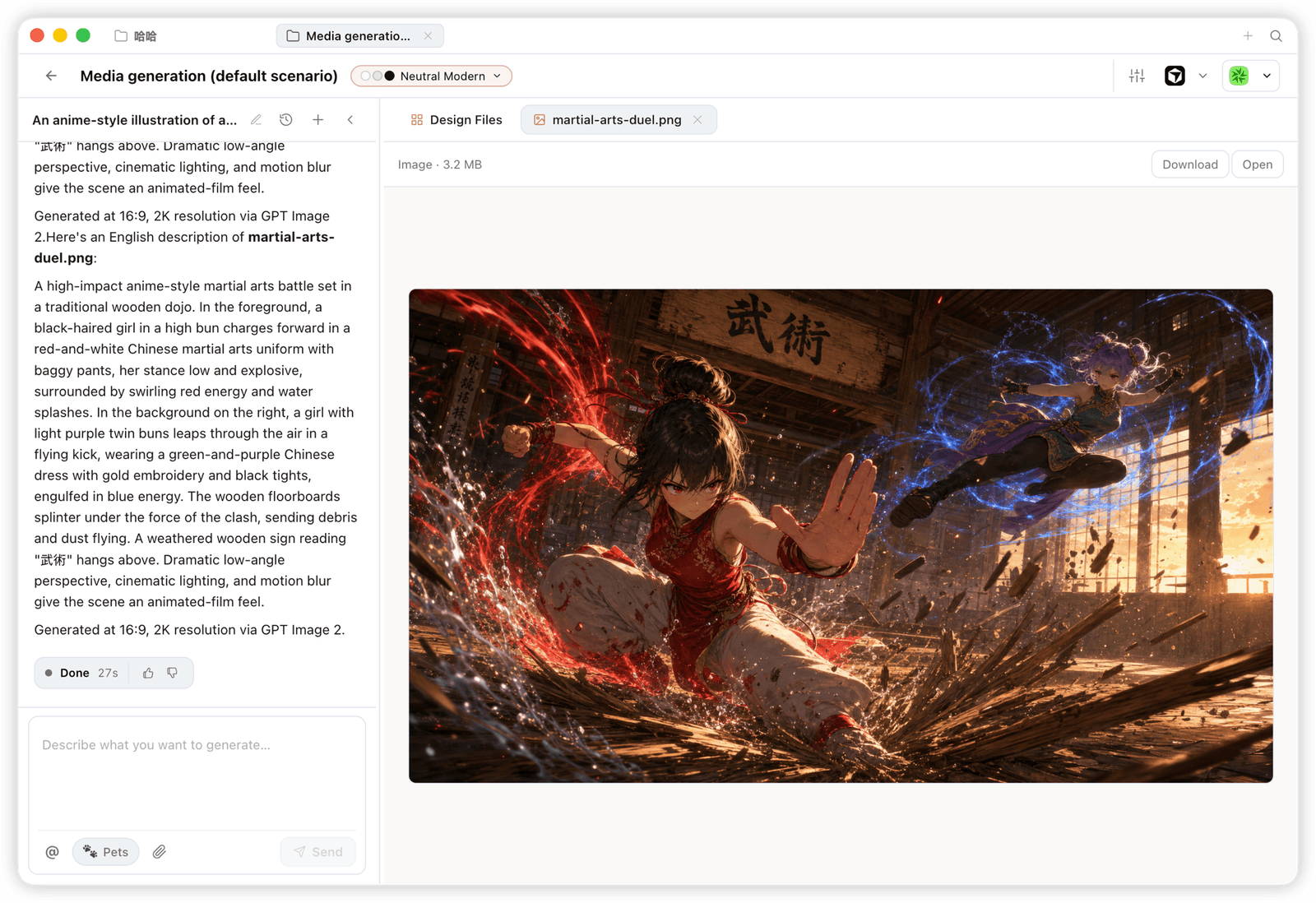 Image — brand-grade images and visual assets, with high-resolution generation and download. |
Platform Compatibility
Open Design ships as skills, a CLI, and an MCP server that mainstream coding agents consume natively. Once OD is installed, a single
od mcp install <agent>wires the MCP server into that agent's config, and you call the same tools from inside any agent.
| Coding agent / platform | Status | One-line MCP server install |
|---|---|---|
| Claude Code | ✅ Supported | od mcp install claude |
| Codex CLI | ✅ Supported | od mcp install codex |
| DeepSeek Reasonix | ✅ Supported | od mcp install reasonix |
| Raven | ✅ Supported | od mcp install raven |
| Cursor | ✅ Supported | od mcp install cursor |
| VS Code + GitHub Copilot | ✅ Supported | od mcp install copilot |
| GitHub Copilot CLI | ✅ Supported | od mcp install copilot |
| Gemini CLI | ✅ Supported | od mcp install gemini |
| OpenCode | ✅ Supported | od mcp install opencode |
| OpenClaw | ✅ Supported | od mcp install openclaw |
| Antigravity | ✅ Supported | od mcp install antigravity |
| Cline | ✅ Supported | od mcp install cline |
| Trae | ✅ Supported | od mcp install trae |
| Kimi CLI | ✅ Supported | od mcp install kimi |
| Kiro | ✅ Supported | od mcp install kiro |
| Pi Agent | ✅ Supported | od mcp install pi |
| Mistral Vibe CLI | ✅ Supported | od mcp install vibe |
| Hermes Agent | ✅ Supported | od mcp install hermes |
od mcp install <agent> --print for a dry-run preview · --uninstall to remove · full list with od mcp install --help.
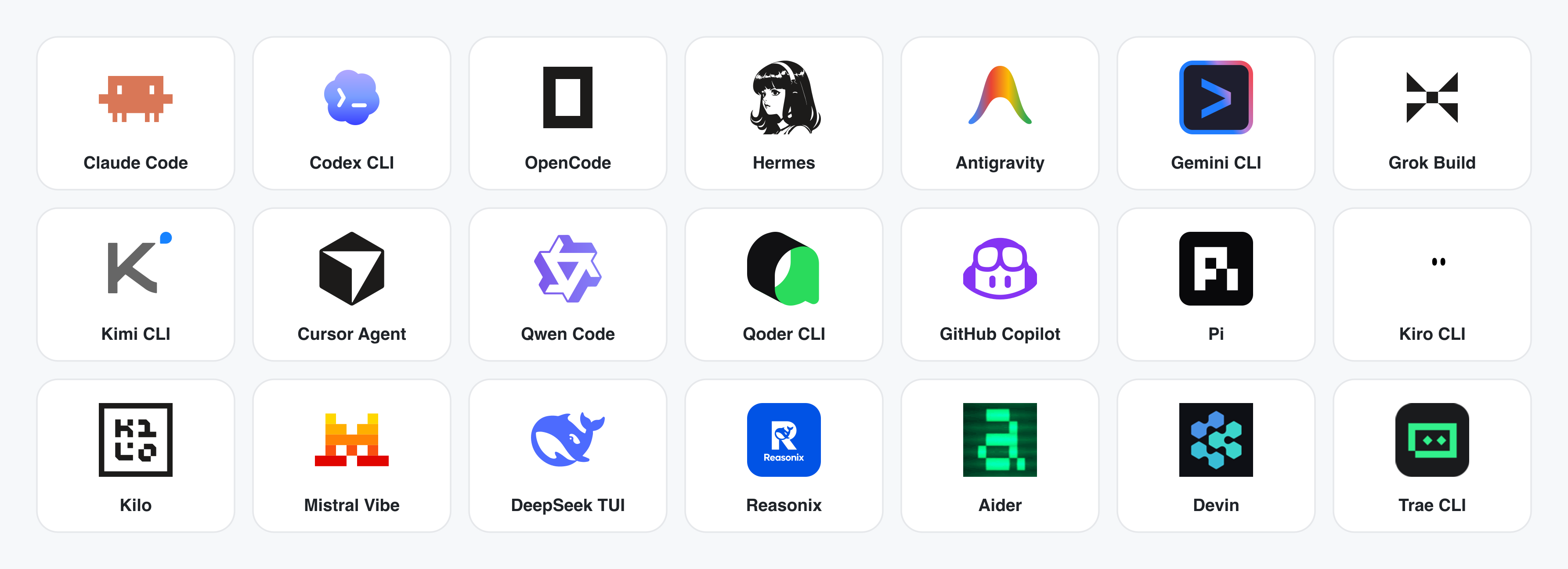
No CLI installed? The BYOK proxy at POST /api/proxy/{anthropic,openai,azure,google,ollama,senseaudio}/stream gives you the same loop (no process spawn) — paste baseUrl + apiKey + model, with presets for OpenAI, Atlas Cloud, Anthropic, Azure OpenAI, Google Gemini, Ollama, LM Studio, vLLM, or any OpenAI-compatible endpoint. Atlas Cloud uses https://api.atlascloud.ai/v1 with your own key and OpenAI-compatible model ids such as qwen/qwen3.5-flash. Per-target SSRF protection blocks internal IPs / link-local / CGNAT at the daemon edge.
Runtime definitions live in apps/daemon/src/runtimes/defs/, with registration and shared stream handling under apps/daemon/src/runtimes/. See docs/agent-adapters.md for the adapter contract.
Demo
Four core product categories, all rendered by a coding agent running on your laptop. Click a thumbnail to see the real example.
1 · Prototypes — web · desktop · mobile
The default output surface. Single-page HTML artifacts that read your DESIGN.md and render in a sandboxed iframe.
 Entry view — pick a skill, pick a design system, type the brief. One surface for prototypes, dashboards, decks, mobile apps, magazine pages. |
 Mobile prototype — pixel-accurate iPhone 15 Pro chrome, multi-screen flows. The agent never redraws the phone frame; shared device frames live in assets/frames/.
|
 Web prototype — an editorial dashboard with scrollbars, KPIs, and charts. Rendered straight from design-templates/dating-web/.
|
 Mobile app prototype — a three-screen gamified flow with XP ribbons and quest detail. Hand off straight to Cursor / Codex / Claude Code to turn into React/Next/Vue. |
2 · Live artifacts & dashboards
Live dashboards, decision rooms, KPI walls — single-page artifacts that pull data through a tweaks panel and stay editable in place.
 Live dashboard — an editable KPI wall whose tweaks panel surfaces the parameters worth nudging. The agent emits a manifest, and the iframe re-renders without a reload. |
 Decision room — a multi-source briefing artifact for product / research / ops meetings. |
 GitHub-style dashboard — repo metrics presented as a live artifact. |
 Flow live-dashboard template — a domain-specific KPI template, branded through the active DESIGN.md.
|
3 · Decks — magazine decks, weekly updates, pitches
 Deck mode (guizang-ppt) — magazine layouts, WebGL hero, P0/P1/P2 checklists. Bundled verbatim from op7418/guizang-ppt-skill with its original license preserved.
|
 Swiss International-style deck — grid-anchored, monochrome accents. One of 15 deck templates and 36 themes under design-templates/html-ppt-*/.
|
Every deck exports to HTML (single file, inlined assets), PDF (browser print, deck-aware), PPTX (agent-driven skill), ZIP (archive), or Markdown.
4 · Images — gpt-image-2, ImageRouter, custom API
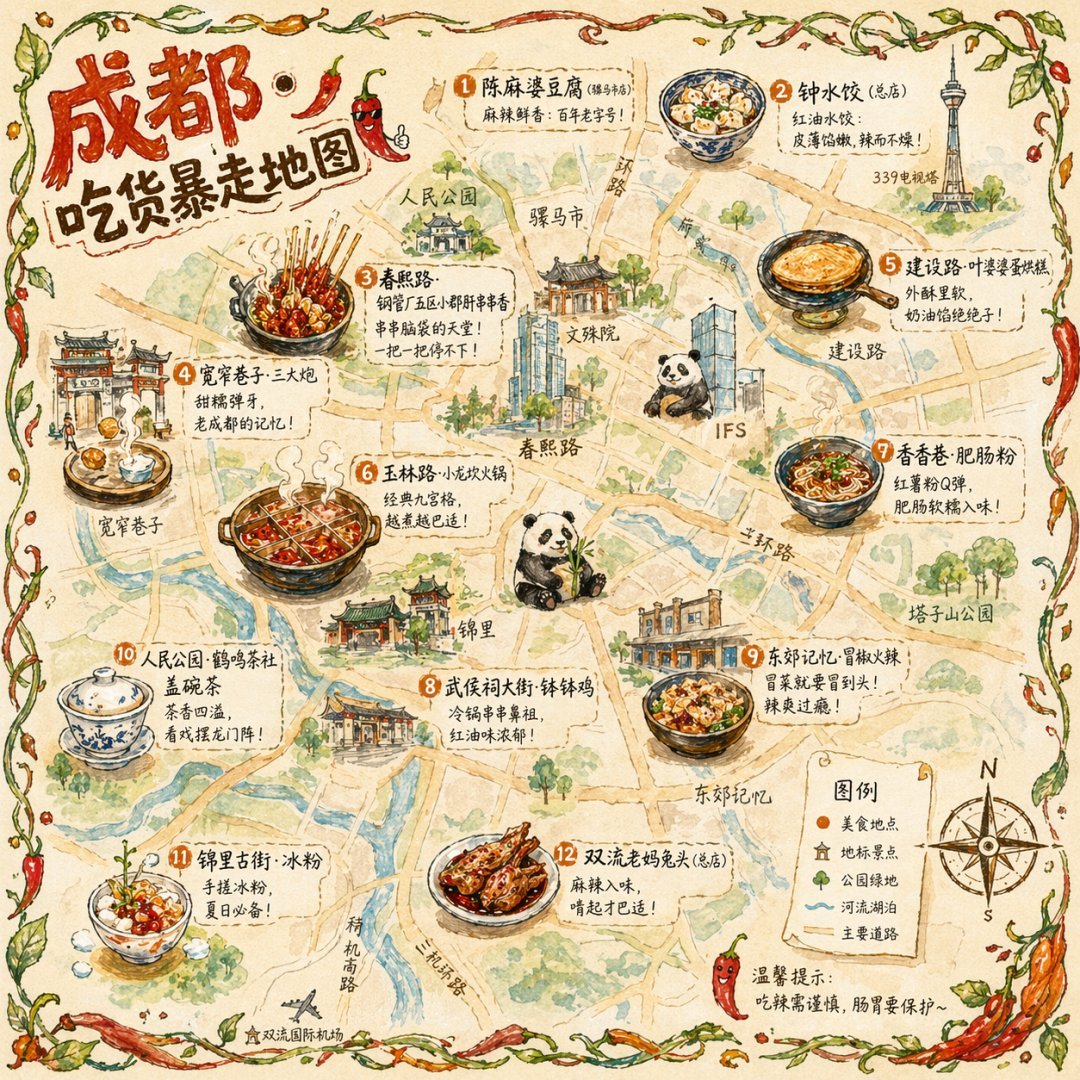 Illustrated city food map Hand-drawn editorial travel poster |
 Cinematic elevator scene Single-frame editorial still |
 Cyberpunk portrait Profile avatar — neon face text |
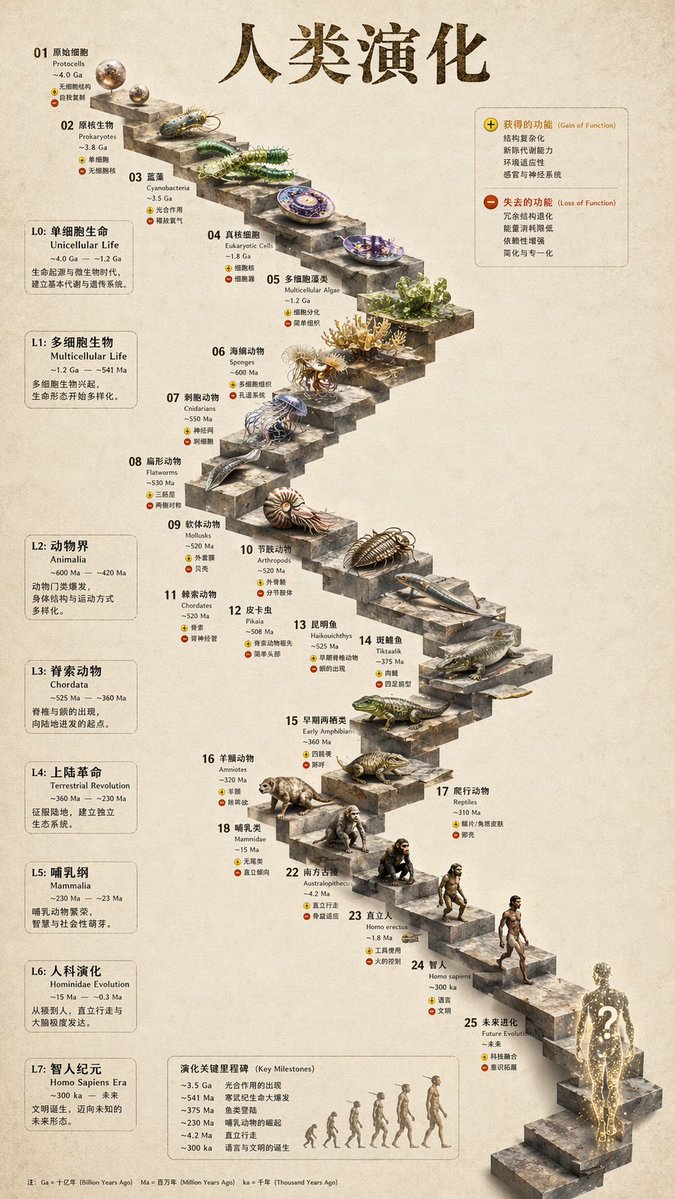 3D stone staircase Hewn-stone infographic |
 Glamorous portrait Editorial studio shot |
93 ready-to-replicate prompts live in prompt-templates/ — preview thumbnails, full prompt body, target model, aspect ratio, and source attribution. One click drops a brief into the composer.
5 · Video & HyperFrames — agent-native motion graphics
HyperFrames is HeyGen's open-source, agent-native video framework, integrated as a first-class citizen in Open Design. The agent writes HTML + CSS + GSAP, and HyperFrames renders it to a deterministic MP4 via headless Chrome + FFmpeg. Pair it with Seedance 2.0 for cinematic t2v / i2v, Veo 3 / Sora 2 / Kling 2 for routed model variants, and Suno v5 / Lyria 2 for the audio layer.
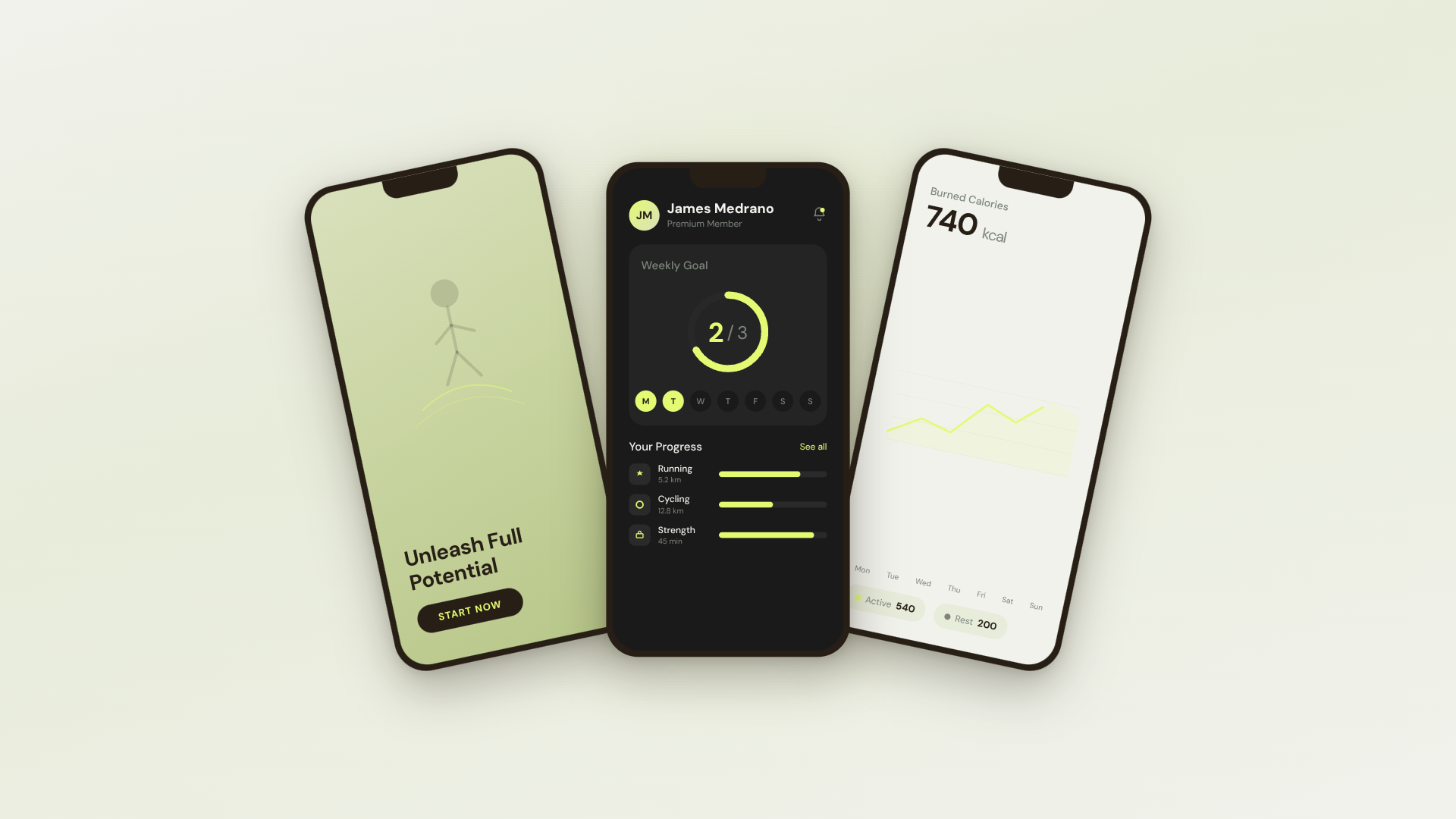 30s SaaS product promo · 16:9 · UI 3D reveals |
 TikTok karaoke talking-head · 9:16 · TTS + word-synced captions |
 30s brand sizzle reel · 16:9 · audio-reactive kinetic type |
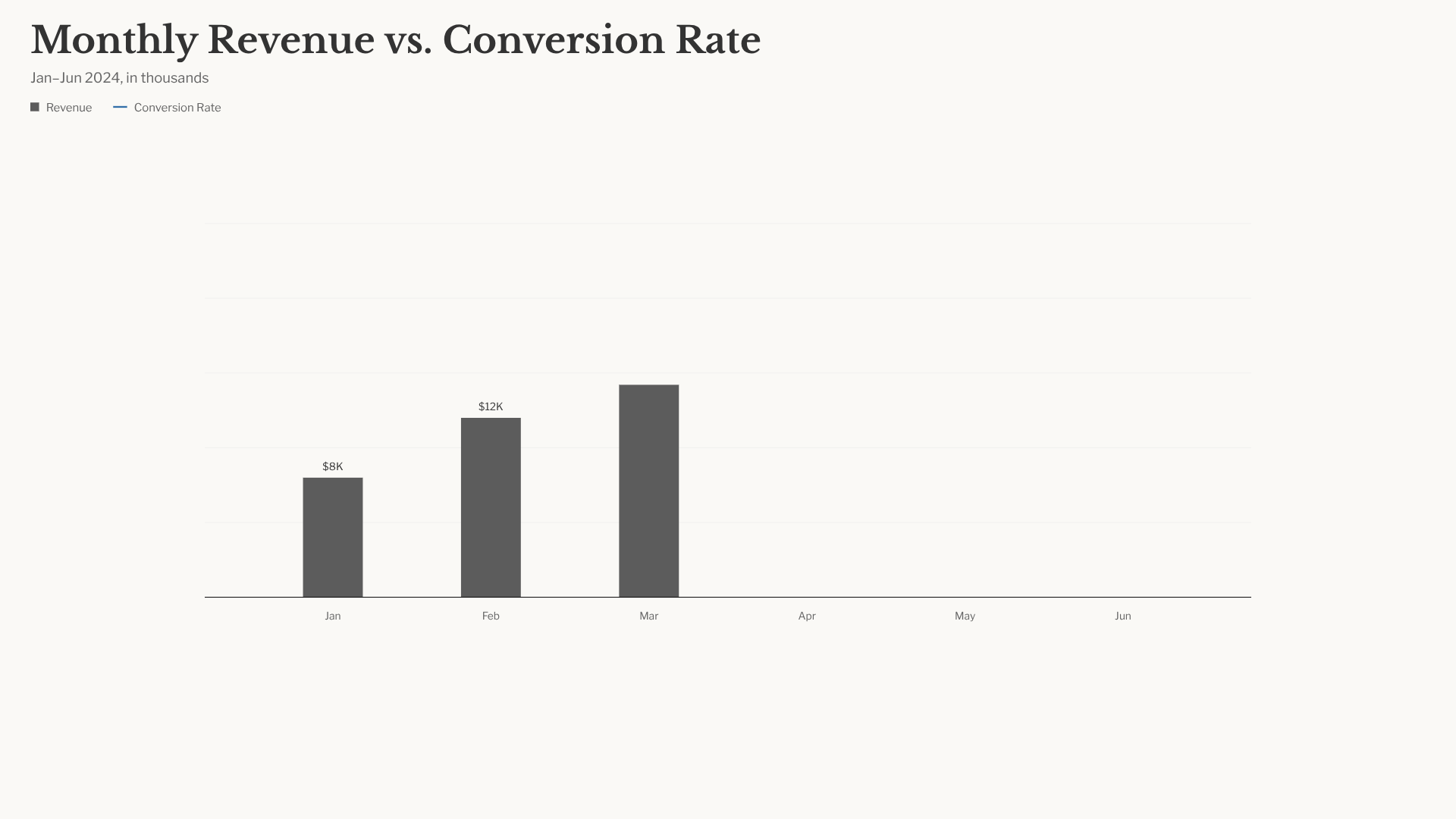 Bar chart race · 16:9 · NYT-style data infographic |
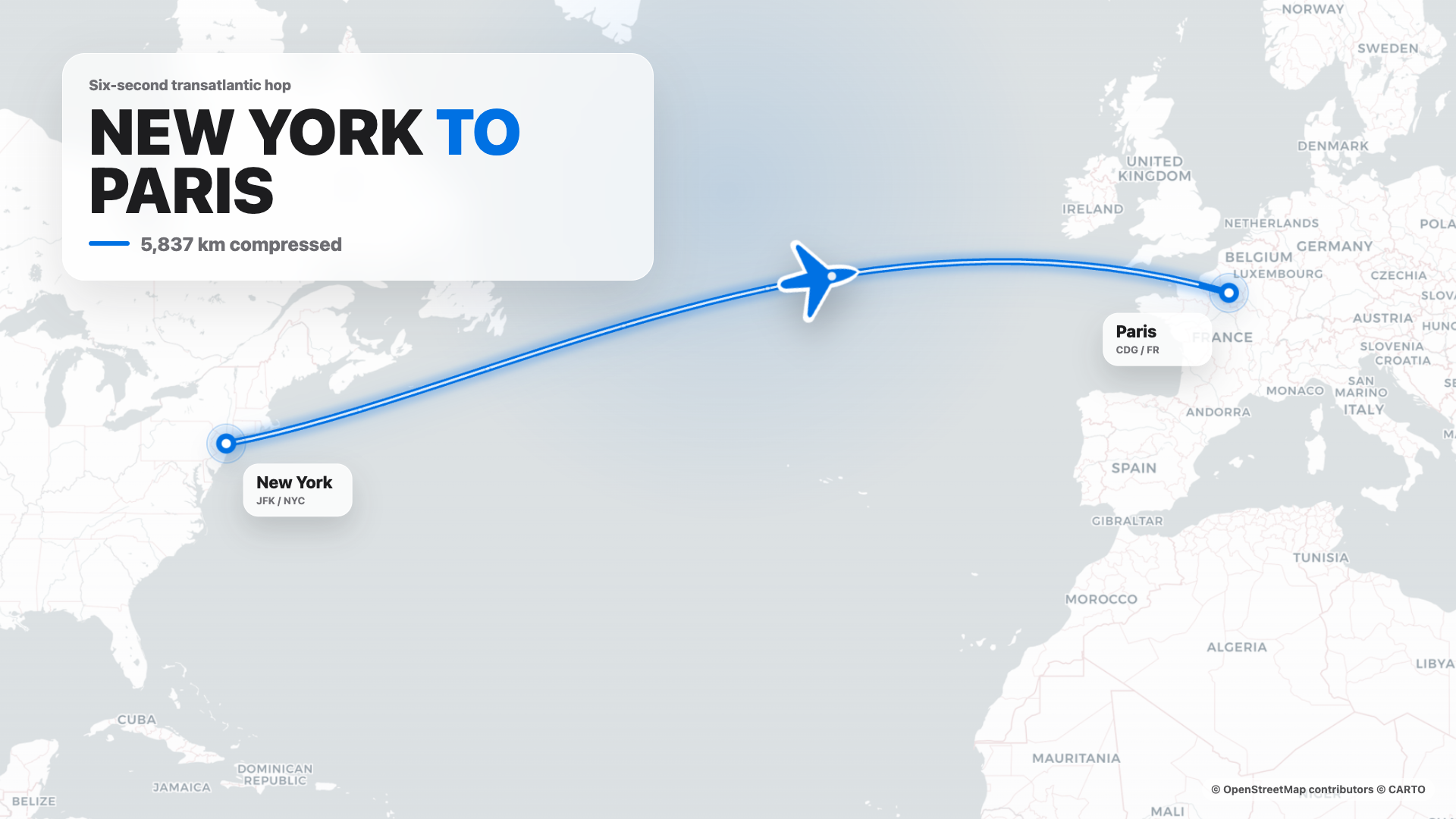 Flight map · 16:9 · Apple-style route reveal |
4s cinematic logo outro · 16:9 · piece-by-piece assembly + bloom |
 $0 → $10K money counter · 9:16 · Apple-style hype |
 Website-to-video · 16:9 · captures the site at 3 viewports |
11 HyperFrames templates + 39 Seedance prompts ship with the repo. Catalog thumbnails © HeyGen; the framework is Apache-2.0. The OD-specific render workflow (composition cache, sandbox-exec workaround, MP4-as-chip) is detailed in design-templates/hyperframes/.
Why Open Design
In April 2026, Anthropic released Claude Design — the first time an LLM stopped writing prose and started delivering design artifacts directly. It went viral. But it stayed closed-source, paid-only, cloud-only, locked to Anthropic's model, Anthropic's skills, Anthropic's surface. No checkout, no self-host, no Vercel deploy, no swap-in-your-own-agent.
Open Design (OD) is the open-source alternative. Same loop, same artifact-first mental model, none of the lock-in:
- 🤖 Agent-native, model-agnostic. We don't ship an agent. The
claude/codex/cursor-agent/copilot/hermes/kimialready on yourPATHare the design engine. Swap with one click. - 🧠 Brand-grade by default. Every render reads the active package's
DESIGN.mdas the core brand contract. 151 design-system packages ship with the repo; legacy packages may beDESIGN.md-only, while newer packages can addmanifest.json,tokens.css, components, assets, and provenance. Drop a folder in, the picker finds it. - 🖥️ Local-first, BYOK at every layer. Native desktop apps for macOS (Apple Silicon + Intel) and Windows (x64). Linux AppImage on the optional release lane. Product analytics and session replay are consent-gated; scrubbed safety and reliability telemetry is always on. Before describing daemon data paths, contributors and operators MUST read
AGENTS.md→ Daemon data directory contract. This README MUST NOT restate it. - 🌍 Composable on four planes. Plugins carry runnable workflows · functional skills carry agent behavior · design templates carry rendering blueprints · design systems carry the brand. All four use portable, versionable directories that anyone can author and publish.
- 🔁 Refresh an existing codebase. Hand a
gitrepo +DESIGN.mdto the agent and it refactors your real components to the brand spec. Dedicated plugins migrate Figma / Pencil workflows into React / Next.js / Vue code. - 🔒 Privacy by conviction. Everything runs where your data lives — your laptop, your team's server, your Vercel project. When the network is needed, the BYOK proxy is SSRF-guarded.
Comparison
| Claude Design | Figma | Lovable / v0 / Bolt | Open Design | |
|---|---|---|---|---|
| Open source | ❌ | ❌ | ❌ | ✅ Apache-2.0 |
| Self-host / desktop | ❌ | ❌ | ❌ | ✅ macOS + Windows + Docker + Vercel web |
| Agent-native (runs in your CLI) | Anthropic only | ❌ | Cloud agent only | ✅ 25 CLIs + BYOK |
Brand-grade DESIGN.md |
Proprietary | Theme JSON | Limited tokens | ✅ 151 systems shipped |
| Skills / plugins / templates | Closed | Plugin store | Closed | ✅ 100+ functional skills · rendering templates · 277 plugins |
| HyperFrames (HTML→MP4) | ❌ | ❌ | ❌ | ✅ First-class |
| Refresh an existing repo to brand | ❌ | ❌ | ❌ | ✅ via agent + DESIGN.md |
| Minimum billing | Pro / Max / Team | Pro / Org | Pro / Team | BYOK · any compatible endpoint |
Quick start
🖥️ Download the desktop app (recommended — zero config)
The fastest way to use Open Design. No Node, no pnpm, no clone.
- macOS (Apple Silicon · Intel x64) → open-design.ai or GitHub Releases
- Windows (x64) → open-design.ai or GitHub Releases
- Linux (AppImage, optional lane) → GitHub Releases
After install: the app auto-detects every coding-agent CLI on your PATH, loads 100+ functional skills, the separate rendering-template catalog, and 151 design systems, and lets you type a brief in the entry view.
🤖 Install into your coding agent (no UI)
You can use Open Design without ever opening the GUI — call it as a skill, plugin, or MCP server inside Claude Code, Codex, Cursor, Copilot, OpenClaw, Antigravity, Hermes, Kimi, and more.
If you installed the macOS desktop app via the DMG or Homebrew cask, your shell
may still resolve od to Apple's built-in /usr/bin/od octal-dump utility. In
that case, open Settings → MCP server in the desktop app and copy the
client-specific snippet; it uses absolute paths and does not rely on the bare
od command.
# One-line install into the agent you're using:
od mcp install <agent>
# <agent> = claude | codex | reasonix | raven | cursor | copilot | openclaw
#         | antigravity | gemini | pi | vibe | hermes | cline | kimi
#         | trae | opencode

# Hosted equivalent for curl-based setup:
curl -fsSL https://open-design.ai/install.sh | sh -s <agent>
install.sh is a thin shell wrapper around od mcp install; it exists so the
hosted URL returns shell instead of the landing-page HTML fallback and fails
fast if your shell resolves a non-Open-Design od binary.
macOS / WSL2 users:
/usr/bin/odis a system octal-dump command and can shadow Open Design'sodcommand. Desktop-app users should prefer the Settings → MCP server snippet; WSL2 users should follow theWSL2 setup guidefirst.
Then, inside the agent:
> Use open-design to generate a landing page with the Linear design system
In a filesystem-backed local CLI run, the agent composes the selected functional skill or design template with your DESIGN.md, writes the canonical project files, and Open Design previews those files. A BYOK/plain-API run without filesystem tools instead returns one complete <artifact> block.
🐳 Run with Docker
git clone https://github.com/nexu-io/open-design.git
cd open-design/deploy
cp .env.example .env
echo "OD_API_TOKEN=$(openssl rand -hex 32)" >> .env
docker compose up -d
# open http://localhost:7456
macOS users: If the web UI shows
Authorization: Bearer <OD_API_TOKEN> required, Docker Desktop bridge networking is the cause. See Docker Desktop on macOS for the fix.
🚀 Deploy on Sealos

The Sealos App Store template runs the published Open Design Docker image with persistent workspace storage and Basic Auth on the public proxy. For custom public or shared Docker deployments, follow the reverse-proxy and OPEN_DESIGN_ALLOWED_ORIGINS guidance in deploy/README.md.
🧑💻 Run from source
git clone https://github.com/nexu-io/open-design.git
cd open-design
corepack enable && pnpm install
pnpm tools-dev run web
Open the URL printed by tools-dev; development ports are allocated dynamically unless you pass explicit port flags.
Node ~24, pnpm 10.33.x. WSL2 users, see docs/wsl-setup.md; native Windows users, see docs/windows-troubleshooting.md. Full quickstart, env vars, Nix flake, and packaged build flow → QUICKSTART.md.
A full workflow — from brief to artifact
brief → plugin → direction → design system → artifact → handoff → memory
- A PM submits a brief. The plugin picker offers landing page · pitch deck · dashboard · social post · PM spec · OKR scorecard…
- A designer (or the agent) locks the direction. No brand? Pick from 5 curated directions. Have a brand? Drop a screenshot / URL → the agent connects GitHub, imports Figma, and codifies a reusable
DESIGN.md. - The agent creates the first deliverable. Plugin + functional skill or design template +
DESIGN.mdare bound. Filesystem-backed CLI runs write canonical project files and the preview follows them; BYOK/plain-API runs without file tools return one complete<artifact>block. - Hand off to engineering. The artifact is real HTML/CSS — drop it into Cursor, Codex, or Claude Code to keep building as code. Or export PPTX / PDF / MP4 straight to marketing.
- Open Design gets smarter as you use it. Your screenshots, fonts, palettes, and confirmed artifacts accumulate as defaults for the next session. Less rework, less drift.
Use Open Design from your coding agent
Open Design ships a stdio MCP server and per-agent install scripts. Any MCP-compatible agent in another repo can read files from your local Open Design projects directly — tokens CSS, JSX components, entry HTML — as a structured API queryable by name. The agent always sees the live file, not a stale export.
# One-line install (16+ CLIs supported):
od mcp install <agent>

# Then the agent can:
od project list --json
od files list <project-id> --json
od files read <project-id> <relative-path>
od plugin list --json
od skills list --json
Why MCP? Exporting and re-attaching a zip every iteration breaks flow. MCP exposes the design source directly — the agent always sees the live file.
For an agent starting from scratch, the installer places ~/.config/<agent>/open-design.json (or the platform equivalent) plus a copy-paste MCP snippet. Cursor gets a one-click deeplink; Claude Code gets a claude mcp add-json one-liner; every other agent gets JSON in the schema its config expects. On macOS desktop installs, prefer that Settings snippet over typing bare od mcp install <agent> in Terminal, because /usr/bin/od may win on PATH. Full per-agent flow → Settings → MCP server in the desktop app, or docs/agent-adapters.md.
Security model. Read-only by default, the daemon binds to 127.0.0.1, and SSRF is blocked at the proxy edge. LAN exposure requires an explicit OD_BIND_HOST plus OD_ALLOWED_ORIGINS. Connector credentials and live-artifact preview routes stay loopback-only regardless.
Internally-hosted model endpoints. To prevent SSRF, the daemon blocks provider base URLs that resolve to private/internal address ranges (RFC1918, link-local, CGNAT, and cloud-metadata IPs) by default, surfacing Internal IPs blocked. If you run an internally-hosted gateway (e.g. LiteLLM or Ollama on a VPN-only 10.x/192.168.x address), opt that host out with OD_ALLOWED_INTERNAL_HOSTS=<host1>,<host2>,... — a comma- or whitespace-separated list of bare hostnames or IPs (10.0.0.5, litellm.internal.corp; a host:port or full URL is accepted and reduced to its hostname; IPv6 must be bracketed, e.g. [fd00::1]). The allowlist is strict opt-in (empty by default), exact-host (no subdomain/substring matching), and applies only to provider endpoints you configure (connection test, model discovery, BYOK chat). It deliberately does not relax the guard on download URLs returned inside upstream responses, which stay blocked. A malformed entry — or CIDR notation, which is not supported — is dropped with a warning rather than silently trusted, so a typo never quietly widens (or fails to widen) the guard. Allowlisting a hostname trusts whatever it resolves to (like OD_ALLOWED_ORIGINS); allowlist the resolved IP instead if you want the DNS-resolved address re-checked.
Skills and design templates
100+ functional skills ship in skills/. Each follows the Agent Skills SKILL.md convention and supplies reusable agent behavior, references, or utilities. Renderable starters live separately in design-templates/; they may also use SKILL.md, but they populate the design-template catalog rather than the functional-skill registry.
Two modes anchor the design-template catalog: prototype (web/mobile/desktop single-page artifacts) and deck (horizontal-swipe presentations). Other templates cover image, video, audio, and utility surfaces. The scenario field groups templates by audience: design · marketing · operation · engineering · product · finance · hr · sale · personal.
| Design template | Mode | Scenario | What it produces |
|---|---|---|---|
web-prototype |
prototype | design | Default landing page / hero |
saas-landing |
prototype | marketing | Hero / features / pricing / CTA |
dashboard |
prototype | operation | Admin / analytics (with sidebar) |
mobile-app |
prototype | design | iPhone 15 Pro / Pixel framed app |
mobile-onboarding |
prototype | design | Splash · value-prop · sign-in flow |
social-carousel |
prototype | marketing | 3-card 1080×1080 carousel |
email-marketing |
prototype | marketing | Table-fallback-safe brand email |
magazine-poster |
prototype | marketing | Single-page magazine layout |
motion-frames |
prototype | marketing | Looping CSS motion hero |
sprite-animation |
prototype | marketing | 8-bit pixel animated explainer |
pm-spec |
prototype | product | PM spec doc (with TOC + decision log) |
team-okrs |
prototype | product | OKR scorecard |
eng-runbook |
prototype | engineering | Incident runbook |
finance-report |
prototype | finance | Exec finance summary |
hr-onboarding |
prototype | hr | Role onboarding plan |
guizang-ppt |
deck | marketing | Magazine-style web PPT (deck default) |
html-ppt-* |
deck | marketing | 15 deck templates × 36 themes (master template in design-templates/html-ppt/) |
hyperframes |
video | marketing | HTML → MP4 motion graphics (HeyGen OSS framework) |
critique |
utility | design | Five-dimensional self-critique scoresheet |
tweaks |
utility | design | AI-emitted tweaks-panel manifest |
Full protocol and directory split → docs/skills-protocol.md. Registry endpoints: GET /api/skills for functional skills and GET /api/design-templates for rendering templates.
Design Systems
151 brand-grade design-system packages centered on DESIGN.md ship with the repo. Legacy packages may contain only that Markdown contract; newer packages can also carry manifest.json, compiled tokens.css, component fixtures, assets, and provenance evidence. The catalog mixes upstream-derived systems with project-owned additions; design-systems/README.md records the package shape and provenance. Switch a system → the next render uses the new tokens.
Full catalog (click to expand)
AI & LLM — claude · cohere · mistral-ai · minimax · together-ai · replicate · runwayml · elevenlabs · ollama · x-ai
Developer Tools — cursor · vercel · linear-app · framer · expo · clickhouse · mongodb · supabase · hashicorp · posthog · sentry · warp · webflow · sanity · mintlify · lovable · composio · opencode-ai · voltagent
Productivity — notion · figma · miro · airtable · superhuman · intercom · zapier · cal · clay · raycast
Fintech — stripe · coinbase · binance · kraken · mastercard · revolut · wise
E-commerce — shopify · airbnb · uber · nike · starbucks · pinterest
Media — spotify · playstation · wired · theverge · meta
Automotive — tesla · bmw · ferrari · lamborghini · bugatti · renault
Other — apple · ibm · nvidia · vodafone · resend · spacex
Starters — default (Neutral Modern) · warm-editorial
Re-import the library via scripts/sync-design-systems.ts. Add your own brand → drop a DESIGN.md into design-systems/<brand>/. Full guide → design-systems/README.md.
Plugins
277 official plugins plus 183 remixable reference examples live in plugins/_official/. Each entry is a portable plugin directory anchored by open-design.json plus the payload required by its type: for example SKILL.md for agent workflows, template.json for media templates, or DESIGN.md for design-system entries. Jump straight to a category:
| Category | Count | Contents |
|---|---|---|
scenarios/ |
13 | Complete design scenarios — od-default, od-design-refine, od-figma-migration, od-code-migration, od-react-export, od-nextjs-export, od-vue-export, od-media-generation, od-new-generation, od-tune-collab, od-plugin-authoring, od-share-to-community, od-web-effect-extractor |
image-templates/ |
45 | One-shot image prompts — editorial, cinematic, product, portrait |
video-templates/ |
63 | HyperFrames / Seedance / Veo motion templates |
design-systems/ |
143 | Brand DESIGN.md wrapped as plugins |
atoms/ |
13 | Reusable UI fragments (buttons, heroes, KPI cards) |
examples/ |
183 | Remixable reference outputs |
Also plugins/community/ for community plugins and plugins/registry/ for the publishing flow.
What plugins can do
- 🤖 Run in any coding agent — Claude Code, Codex, Cursor, Copilot, OpenClaw, Antigravity, Hermes, Kimi… through the same skill protocol the agent already knows.
- 🔁 Migrate Figma / Pencil workflows → React, Next.js, or Vue source. See
od-figma-migration. - 🛠️ Refresh an existing codebase to a brand spec — point a plugin at a
gitrepo +DESIGN.md, get a PR. Seeod-code-migration. - 💾 Persist custom workflows — your team's reusable templates sit next to the shipped ones.
Using plugins
Plugins are at full parity across the web UI and the od CLI — same /api/plugins endpoints, pick whichever fits.
In the desktop / web app: open the Plugin page to browse the marketplace and click Install; inside a project's Studio, plugins appear as composer chips you click to apply (with the inputs they declare).
On the command line (runs without a UI — this is the path external agents use):
od plugin list                       # list installed plugins (--task-kind / --mode / --tag filters)
od plugin search "landing page"      # search by keyword
od plugin info od-default            # inspect a plugin's metadata, inputs, capabilities
od plugin install od-figma-migration # install from a registry; also accepts ./local-folder or an https://… link
od plugin apply od-default --input brief="a one-page pitch for our seed round"
od plugin upgrade od-default         # upgrade
od plugin uninstall od-default       # uninstall
Every command supports --json, so you can pipe it through jq / xargs into automation.
Building a plugin
An Open Design plugin requires open-design.json plus the payload required by its type. A workflow skill or scenario also includes SKILL.md; manifest-only template and design-system entries use their own payloads instead:
my-plugin/
├── open-design.json    ← required: marketplace metadata + inputs + pipeline + capabilities
├── SKILL.md            ← required for agent-skill/scenario entries; omitted for other plugin types
├── README.md           ← optional: usage, install, registry links
├── preview/            ← optional: index.html / poster.png (strongly recommended for visual plugins)
└── examples/           ← optional: concrete use cases
Core open-design.json fields: specVersion (currently 1.0.0), name (stable ID), version (semver), optional compat.agentSkills[].path (points at ./SKILL.md when the entry exposes an Agent Skill), od.kind (skill / scenario / atom / bundle), od.taskKind (new-generation / figma-migration / code-migration / tune-collab), od.mode (the output surface, e.g. prototype / deck / live-artifact / image / video / hyperframes / audio / design-system / scenario), od.capabilities[] (declare the minimum — a restricted install grants only prompt:inject by default), od.inputs[] (apply-time parameters).
Scaffold + validate locally:
od plugin scaffold --id my-plugin --title "My Plugin"   # generate the skeleton
od plugin validate ./my-plugin                          # check manifest / file layout
pnpm guard && pnpm --filter @open-design/plugin-runtime typecheck
Full field set and runtime contract → plugins/spec/SPEC.md; developing a plugin with a coding agent → plugins/spec/AGENT-DEVELOPMENT.md; copy-paste minimal templates → plugins/spec/examples/.
Contributing a plugin
- Drop the plugin folder into
plugins/community/(third-party plugins), or — to ship it bundled with Open Design — into the matching tier ofplugins/_official/. - Pass validation:
od plugin validate,pnpm guard,pnpm --filter @open-design/plugin-runtime typecheck. - Fill the PR using the template in
plugins/spec/CONTRIBUTING.md(ID, version, lane, mode, capabilities, trigger examples; attach a screenshot / preview for visual plugins). - To publish to an external registry (skills.sh / ClawHub / standalone GitHub) →
plugins/spec/PUBLISHING-REGISTRIES.md.
Plugin registry endpoint: GET /api/plugins. Directory overview → plugins/README.md (简体中文).
Architecture
┌────────────────── browser (Next.js 16) / Electron shell ──────────────┐
│  chat · file workspace · iframe preview · settings · import · MCP     │
└──────────────┬─────────────────────────────────────┬─────────────────┘
               │ /api/*                              │
               ▼                                     ▼
   ┌─────────────────────────────────┐   /api/proxy/{provider}/stream (SSE)
   │  local daemon (Express+SQLite)  │   ─→ any OpenAI-compatible BYOK,
   │                                  │       SSRF-guarded at the edge
   │  /api/skills    /api/design-templates    /api/plugins    │
   │  /api/design-systems            │
   │  /api/chat (SSE)   /api/proxy/* │
   │  /api/projects/:id/files/...    │
   │  /api/artifacts/{save,lint}     │
   │  /api/import/claude-design      │
   │  MCP stdio server                │
   └─────────┬───────────────────────┘
             │ spawn(cli, [...], { cwd: managed project cwd })
             ▼
   ┌──────────────────────────────────────────────────────────────────┐
   │  Local runtime definitions come from runtimes/registry.ts;                 │
   │  the base registry has 26 definitions (including byok-opencode),           │
   │  backed by 25 distinct local CLI executables because byok-opencode shares │
   │  the OpenCode executable. See docs/agent-adapters.md.                     │
   │  composes a functional skill or design template + DESIGN.md; writes files │
   └──────────────────────────────────────────────────────────────────┘
| Layer | Stack |
|---|---|
| Frontend | Next.js 16 App Router + React 18 + TypeScript |
| Daemon | Node 24 · Express · SSE streaming · better-sqlite3 |
| Storage | Before changing or documenting daemon storage paths, you MUST read AGENTS.md → Daemon data directory contract. This README MUST NOT restate it. |
| Preview | Filesystem runs render canonical project files; BYOK/plain-API runs parse one complete <artifact> block into a sandboxed srcdoc iframe |
| Export | HTML (inlined) · PDF (browser print) · PPTX (agent-driven) · ZIP · Markdown · MP4 (HyperFrames) |
| Desktop | Electron shell + sandboxed renderer + sidecar IPC (STATUS · EVAL · SCREENSHOT · CONSOLE · CLICK · SHUTDOWN) |
| Lifecycle | One entry point: pnpm tools-dev (start / stop / run / status / logs / inspect / check) |
Full architecture → docs/architecture.md. Skill protocol → docs/skills-protocol.md. Agent adapter contract → docs/agent-adapters.md.
Roadmap
- Daemon + 26 runtime definitions across 25 distinct coding-agent CLI executables + skill/design-template registries + design-system catalog
- Web app + chat + question form + 5-direction picker + todo progress + sandboxed preview
- 100+ functional skills · separate rendering-template catalog · 151 design-system packages · 5 visual directions · 5 device frames
- SQLite-backed projects · conversations · messages · tabs · templates
- Multi-provider BYOK proxy (
/api/proxy/{anthropic,openai,azure,google,ollama,senseaudio}/stream) with OpenAI-compatible presets including Atlas Cloud + SSRF guard - Claude Design ZIP import (
/api/import/claude-design) - Sidecar protocol + Electron desktop + IPC automation
- Artifact lint API + 5-dim self-critique pre-emit gate
- 0.8.0 — plugin marketplace infrastructure (261 official plugins, manifest spec, per-agent install scripts)
- 0.9.0 — Open Design Cloud (official model service built into the app: zero config, one-click sign-in)
- 0.10.0 — the all-in-one design workspace: the whole craft loop in one window (references → material → interactive editing → motion → handoff)
- 0.11.0 — The Bazaar: built in the open — a community marketplace of plugins and design systems anyone can pick from and contribute to
- 0.12.0 — Brand-backed Design System: turn the brand you already own into a reusable, portable
DESIGN.mdsystem - 0.13.0 — Stay in Flow: native session resume, faster model picking, and export straight to screenshot-backed PPTX / PDF
- Packaged Electron builds — macOS (Apple Silicon + Intel) + Windows (x64) + Linux AppImage (optional lane)
- Comment-mode surgical edits — partially shipped; reliable targeted patching in progress
- AI-emitted tweaks panel UX — not yet implemented
npx od initto scaffold a project withDESIGN.md- Plugin SDK +
od plugin {add,list,remove,test,publish}CLI - Figma / Pencil → React / Next / Vue migration plugins (alpha)
- Refresh-existing-codebase plugin (point at a git repo +
DESIGN.md)
Phased delivery → docs/roadmap.md.
Community
Real people behind every channel.
- 💬 Discord — daily chat, plugin sharing, questions → discord.gg/mHAjSMV6gz
- 🐦 X / Twitter — release notes, milestones, behind the scenes → @OpenDesignHQ
- 🗣️ GitHub Discussions — deep Q&A, RFCs, "show your work" → Discussions
- 🐛 GitHub Issues — bug reports, feature requests → Issues
The good-first-issue and help-wanted labels are the easiest way in.
Contributing
Open Design keeps moving because contributors — designers, engineers, prompt authors — keep showing up. Many of the most-used skills, design systems, and plugins were written by people outside the core team.
🎯 Where to start (max leverage, min change)
| Want to ship… | How | Where |
|---|---|---|
| A new functional skill | Drop a folder with SKILL.md + optional assets/ + references/ |
skills/ · spec in docs/skills-protocol.md |
| A new rendering design template | Add a renderable SKILL.md bundle |
design-templates/ |
| A new design system | Drop a package centered on DESIGN.md; add manifest.json, tokens.css, components, assets, or provenance when needed |
design-systems/<brand>/ |
| A new plugin | Drop open-design.json + the type-specific payload under a category folder |
plugins/community/ · spec in plugins/spec/SPEC.md · agent dev guide in plugins/spec/AGENT-DEVELOPMENT.md |
| Support a new coding-agent CLI | One runtime definition + registry entry; add a parser only for a new wire format | apps/daemon/src/runtimes/defs/ |
| Fix a bug or polish UI | Browse the good-first-issue label |
Issues → |
| Translate the docs | Update the README.<lang>.md files |
TRANSLATIONS.md |
🤖 Contributing as an agent
If you are the agent reading this, the fastest path is:
# 1. Boot locally
git clone https://github.com/nexu-io/open-design.git
cd open-design && corepack enable && pnpm install
pnpm tools-dev run web

# 2. Find a good-first-issue and assign yourself
gh issue list --label "good first issue" --state open --limit 20
gh issue develop <number>   # create a branch and worktree

# 3. Make the change, run the checks
pnpm guard && pnpm typecheck
pnpm --filter @open-design/<package> test

# 4. Open the PR
gh pr create --fill
Full agent-friendly contribution flow, code style, and PR bar → CONTRIBUTING.md (Deutsch · Français · 简体中文 · 日本語 · 한국어 · Português · ภาษาไทย).
🏅 Open Design Fellow program
We're recruiting Open Design Fellows around the world — Fellows shape the product alongside the core team, represent Open Design officially in their region, and grow the community locally, backed by funded support ($1,000 / MR), free LLM credits, and a direct review track. Details → MAINTAINERS.md and the announcement on Discord.
Maintainers
They carry a lot of the load — daily maintenance, review, and community support.
 @Nagendhra-web Maintainer |
 @Sid-Qin Maintainer |
 @YOMXXX Maintainer |
Maintainer rules, promotion criteria, and the exit protocol → MAINTAINERS.md (also Deutsch · Français · 简体中文 · 日本語 · 한국어 · Português · ภาษาไทย).
Contributors
Thanks to everyone who has taken part — code, docs, feedback, a sharp issue, a new skill, a new design system.
Repository activity

The SVG above is regenerated daily by .github/workflows/metrics.yml using lowlighter/metrics.
Star us
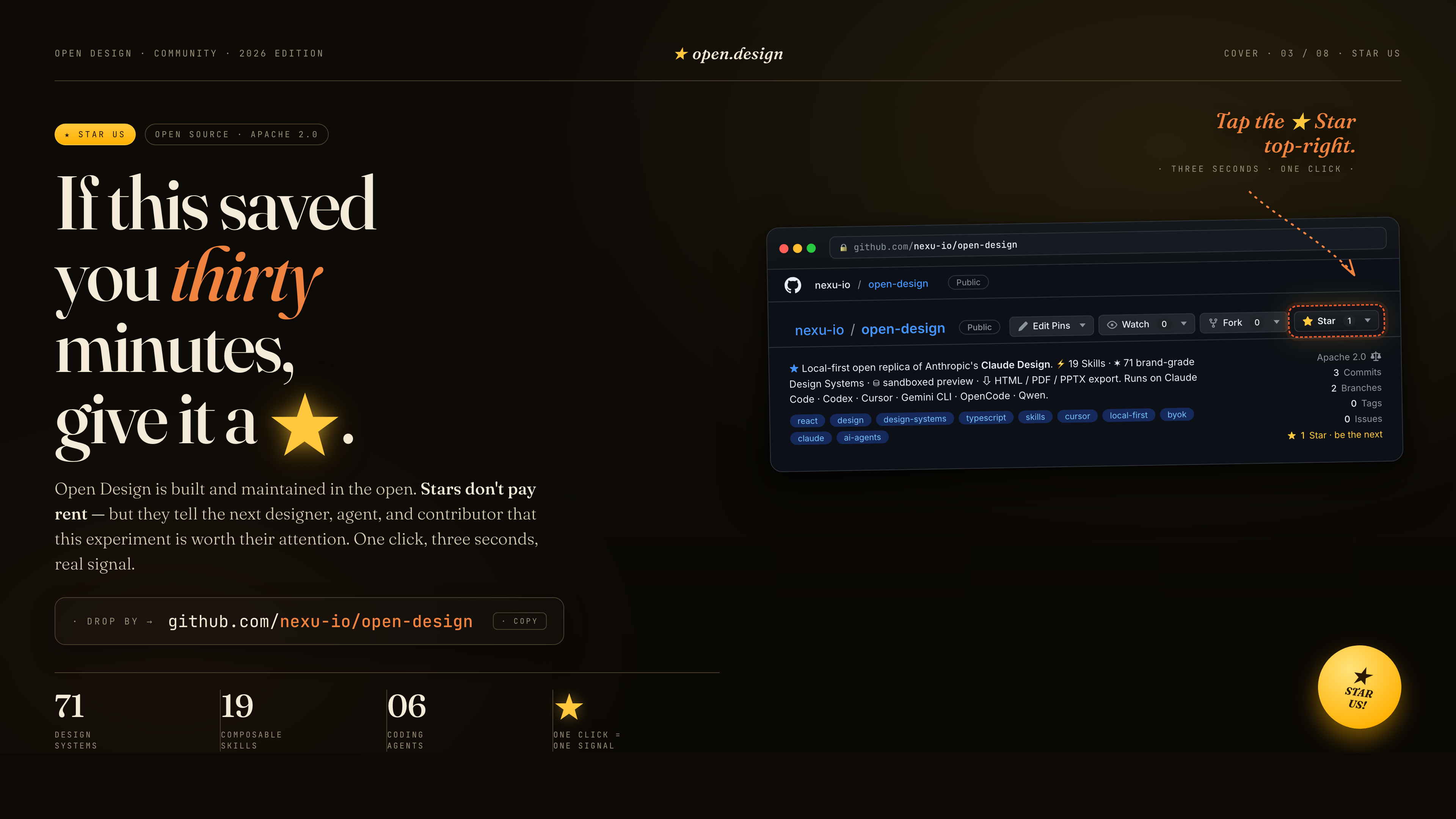
If this saved you thirty minutes, give it a ★. Stars don't pay rent — but they tell the next designer, agent, and contributor that this experiment is worth their attention. One click, three seconds, a real signal.
References & lineage
| Project | Role |
|---|---|
| Claude Design | The closed-source product this repo is the open-source alternative to. |
alchaincyf/huashu-design |
The design-philosophy compass — junior-designer workflow, brand-asset protocol, anti-AI-slop checklist, five-dimensional critique. |
op7418/guizang-ppt-skill |
The magazine-style web PPT skill, bundled verbatim under design-templates/guizang-ppt/. Default for deck mode. |
lewislulu/html-ppt-skill |
The HTML PPT Studio family — 15 deck templates, 36 themes, 31 page layouts, animation runtime, magnetic-card presenter mode. |
OpenCoworkAI/open-codesign |
The first open-source Claude Design alternative; UX patterns we borrow (streaming-artifact loop, sandboxed iframe, live agent panel). |
multica-ai/multica |
The daemon + adapter architecture — PATH-scan agent detection, local daemon as the only privileged process. |
VoltAgent/awesome-design-md |
Historical source of the original 9-section DESIGN.md schema and 70 upstream-derived systems; current packages may extend that baseline. |
bergside/awesome-design-skills |
Source of the 57 design skills added under design-systems/. |
heygen-com/hyperframes |
The HTML→MP4 motion-graphics framework, integrated as the first-class hyperframes-html in Open Design. |
| Claude Code skills | The SKILL.md convention we adopt verbatim. |
Detailed provenance → docs/references.md.
License
Apache-2.0. Bundled skills and templates with their own LICENSE files retain those licenses, including design-templates/guizang-ppt/ (MIT, @op7418), design-templates/html-ppt/ (MIT, @lewislulu), and skills/web-clone/ (MIT, @Jane-xiaoer).