## Summary

- combine Desktop Tauri clippy and tests into one pre-push command
- run clippy first, then tests
- keep unrelated pre-push commands parallel

## Why

PR #3555 added clippy as a separate command while the pre-push group
uses `parallel: true`. That can start clippy and tests simultaneously
against the same Cargo target directory, leaving one command waiting on
Cargo's build lock and making pushes appear stalled.

Serializing only these two Cargo-heavy checks avoids lock contention
while retaining the CI-equivalent clippy command and existing test
coverage.

## Validation

- `lefthook validate`
- forced `desktop-tauri-checks` through Lefthook with an instrumented
`just`; observed `desktop-tauri-clippy` followed by `desktop-tauri-test`

Signed-off-by: Wes <wesbillman@users.noreply.github.com>
Co-authored-by: Carl <c7ebe626f000404285d3686e1dc74cc07cc60a9754a150041ba132e14bd3e2ec@buzz.block.builderlab.xyz>
## Summary

- run Desktop Tauri clippy from pre-push for every path that can affect
the Tauri crate
- reuse `just desktop-tauri-clippy`, keeping the local command identical
to Desktop Core CI
- leave the existing Tauri test hook unchanged

## Why

PR #3553 exposed a hook gap: `cargo test` allowed an unused-import
warning that CI's `clippy -D warnings` correctly rejected. Running the
same recipe before push catches that class of failure locally without
duplicating CI flags in Lefthook.

## Validation

- `lefthook run pre-push --command desktop-tauri-clippy --force`
- confirmed it invokes `cargo clippy --manifest-path
desktop/src-tauri/Cargo.toml --all-targets -- -D warnings`
- command passed

Signed-off-by: Wes <wesbillman@users.noreply.github.com>
Co-authored-by: Carl <c7ebe626f000404285d3686e1dc74cc07cc60a9754a150041ba132e14bd3e2ec@buzz.block.builderlab.xyz>
Opening the agent observer feed could beachball the app. In Tauri 2, a
sync (`pub fn`) command body runs on the **main thread** — only `async
fn` commands run on the runtime pool. Five commands on the observer-feed
open path were sync, so panel open ran SQLite I/O and secp256k1 work on
the macOS main thread:

| Command | Main-thread work |
|---|---|
| `decrypt_observer_event` | Schnorr ID + signature verify, then NIP-44
decrypt — once per frame |
| `read_archived_observer_events_for_channel` | Opens the archive DB,
runs the channel-index JOIN, returns up to 200 raw JSON blobs per page |
| `read_unindexed_observer_rows` | Opens the DB, returns **all**
not-yet-indexed kind-24200 rows in one shot |
| `index_observer_channel_id` | Opens the DB, loops N upserts |
| `delete_save_subscription` | Opens the DB, one delete |

Eager hydration loads up to 10 pages × 200 frames on panel open, so
that's up to 10 main-thread DB reads plus up to 2,000 sequential
verify+decrypt calls before any scrolling. The one-shot backfill makes
it worse on the first open after history accumulates: one read of every
unindexed row, a decrypt per row, then a batch upsert — all on the main
thread, and all proportional to archive size.

The four archive commands now route their DB work through the existing
`run_archive_db_task` helper (`spawn_blocking` + `open_db`), matching
`list_save_subscriptions`, `read_archived_events`, and `archive_events`
directly around them. `decrypt_observer_event` becomes `async fn` +
`tauri::async_runtime::spawn_blocking`, with `state.signing_keys()`
extracted before the spawn since `State` is not `Send` — the same
pattern `sign_event` uses from #1222.

No frontend changes: `invoke` is already promise-based, so the TS
wrappers in `tauriArchive.ts` and `tauriObserver.ts` are unchanged.

This removes the freeze, not the work. Eager hydration still takes the
same wall time — the feed shows a loading state instead of blocking the
UI. Batching the per-frame decrypt IPC (2,000 round-trips into one
command) would cut the latency itself; that's deliberately out of scope
here.

Signed-off-by: Will Pfleger <pfleger.will@gmail.com>
## Summary

Fixes two distinct fidelity failures in direct agent sharing:

- The sender now puts the same effective avatar shown on the agent card
into People-share and file-export snapshot PNGs, including
profile/kind:0 fallback avatars.
- The importer now persists the visible PNG body as the portable avatar
instead of ignoring it in favor of sender-local manifest references.
- Export materializes inherited runtime, provider, and model identifiers
verbatim, while preserving explicit definition values. It does not
translate or substitute configuration for a different recipient setup.
- Sharing waits for a profile-only fallback avatar query, preventing an
early-click race.

The PNG import path keeps the existing safety invariant: decode is
capped at 2048×2048 / 32 MiB and re-encoded avatars above the 2 MiB
inline limit fall back to the manifest reference. The exact transparent
1×1 no-avatar placeholder is ignored.

The original Tyler↔Wes screenshot demonstrates both stages: Wren's
attachment had an avatar that disappeared after **Add agent**
(receiver/import failure), while Pinky's attachment was already blank
(sender/projection failure).

### Related issue

N/A — reported and traced in the linked Buzz conversation.

### Testing

- `cargo test --manifest-path desktop/src-tauri/Cargo.toml
commands::personas::snapshot` — 57 passed
- `pnpm exec tsc --noEmit`
- Biome check on changed frontend/E2E files
- Pre-push hooks:
  - desktop check
  - desktop tests
  - desktop Tauri tests — 1853 passed, 14 ignored
  - file-size ratchet

The People-share E2E regression asserts that a profile-only avatar
reaches `avatarPngDataUrl` in the real encode command payload.

---------

Signed-off-by: Wes <wesbillman@users.noreply.github.com>
Co-authored-by: Carl <c7ebe626f000404285d3686e1dc74cc07cc60a9754a150041ba132e14bd3e2ec@buzz.block.builderlab.xyz>
## Summary
- Add a shared footer fade behind the floating tabs on Home, Activity,
and Search.
- Use a shared anchored popover for Activity filters and section
actions, with working section move controls.
- Polish message grouping/press states and remove the initial Search
back button.
<img width="630" height="1368" alt="Screenshot 2026-07-29 at 08 49 37"
src="https://github.com/user-attachments/assets/9e787adf-0bb3-49c6-8224-5819e8cfb1ad"
/>

### Testing
- `flutter analyze`
- `flutter test`
- Release build installed and checked on a connected iPhone

### Screenshots
A real-device Activity baseline showing the original solid footer is
attached in a PR comment. The updated review build was checked on the
connected iPhone.

---------

Signed-off-by: kenny lopez <klopez4212@gmail.com>
## Summary
Databricks v2 chooses the gateway wire format — OpenAI Responses,
Anthropic Messages, or MLflow chat — purely from substrings in the
endpoint name. There is no family field on the endpoint to key off, so
the substring set *is* the routing contract. The matcher only recognised
`gpt-5`/`gpt5` and `claude`, which makes correct billing depend on every
Claude endpoint happening to be named with the literal string "claude".
## Why this matters
Getting a Claude model onto the Anthropic Messages route is exactly what
lets buzz attach the `cache_control` breakpoint (the fix in #3463). If a
Claude endpoint's catalog name omits "claude" — an alias, a bare
`opus-5`, a `goose-opus-5` — it silently falls through to the MLflow
(OpenAI-wire) path, where Anthropic prompt caching is **structurally
impossible**. The result is the same failure #3463 fixed: 0% cache
reads, the full ~10x read discount lost, and no error — a naming
convention quietly holding up a billing-correctness invariant.
## What changed
`databricks_v2_route_for_model` (`crates/buzz-agent/src/llm.rs`) now
matches broader, case-insensitive marker sets:
- **Claude → Anthropic Messages:** `claude`, `opus`, `sonnet`, `haiku`,
`mythos`, `fable` — the Claude family names and release code names, so a
Claude endpoint reaches the cache-capable route regardless of how it's
named.
- **GPT → OpenAI Responses:** the `gpt` family (now `gpt` on its own,
not just `gpt-5`) plus the GPT-5 launch code names `sol`, `luna`,
`terra`.
OpenAI markers are evaluated first, preserving the prior `gpt-5`-first
precedence for any name that could carry both. Names matching neither
set still fall through to the MLflow chat route.
## Testing
- `cargo fmt`, `cargo clippy -p buzz-agent --all-targets -- -D warnings`
— clean.
- `cargo test -p buzz-agent` — all green (299 lib + integration suites,
0 failures). The `databricks_v2_routes_by_model_family` test was
expanded to cover each new marker, the GPT-5 code names,
case-insensitivity, and the unchanged MLflow fallback (including
`gemini`).
## Relationship to #3463#3463 taught the Anthropic path to request caching; this makes sure
Claude models actually land on that path. Follow-up still open:
surfacing `cache_creation_input_tokens` end-to-end so a persistent
`reads == 0 && writes == 0` reveals a disabled cache regardless of which
wire a model takes — happy to do that next.
🤖 Generated with [Claude Code](https://claude.com/claude-code)
Signed-off-by: Atish Patel <atish@squareup.com>
Co-authored-by: Claude Opus 4.8 (1M context) <noreply@anthropic.com>
## Summary

- Simplify the community invite dialog around link sharing.
- Add matching expiry and use-limit dropdowns, with sensible preset use
caps.
- Cover the default unlimited and selected-limit invite payloads.

## Validation

- `pnpm -C desktop run build:e2e`
- `pnpm -C desktop exec playwright test
tests/e2e/invite-link-copy.spec.ts
tests/e2e/invites-settings-screenshots.spec.ts --project=smoke`

Signed-off-by: kenny lopez <klopez4212@gmail.com>
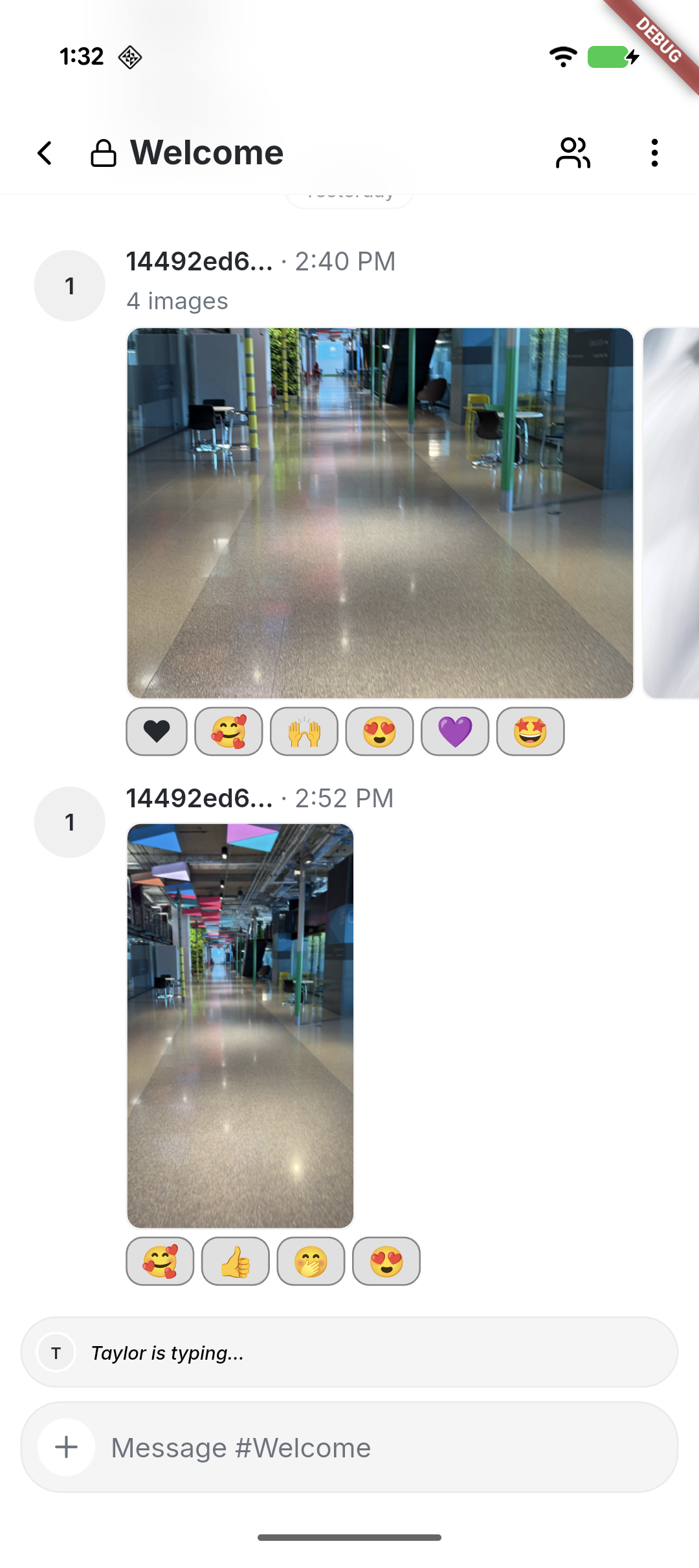
## Summary
- Present channel and thread typing status in a composer-matched
container.
- Animate the strip so the message list moves smoothly as typing begins
and ends.
- Increase typing-label contrast and avatar/padding for readability.
## Pixel 10 snapshot
## Validation
- `flutter test test/features/channels/channel_detail_page_test.dart`
- `flutter analyze`
Signed-off-by: kenny lopez <klopez4212@gmail.com>
> On 8 tasks matched by name across the two runs, cost fell $8.36 →
$1.77 (4.71×) and wall-clock 12,423 s → 1,085 s (11.45×).

## Summary

Two independent, self-contained fixes to `buzz-agent`/`buzz-acp`, split
out of the benchmark branch so they can land while the harness work
continues:

1. **Request and surface Anthropic prompt caching.** buzz never sent a
`cache_control` breakpoint, so on the Databricks Anthropic route
`cache_read_input_tokens` was **structurally always 0** and the ~10×
cache-read discount was never claimed. This teaches `anthropic_body()`
to mark the cacheable prefix, and plumbs the cache split end-to-end so
accounting can price it.
2. **Pass proxy + TLS-trust env into MCP tool subprocesses**, so agent
tools on a proxy-only host stop reporting a live network as offline.

## Why the caching gap matters

The Anthropic Messages API does **not** cache unless the request carries
a `cache_control` breakpoint, and the Databricks AI Gateway — a
third-party proxy in front of the model, in the same category as
Bedrock/Vertex — does **not** auto-cache (only the first-party Anthropic
API and Claude-on-AWS do zero-config caching). So every request was
billed cold.

Measured live against the Databricks gateway
(`databricks-claude-opus-5`, 2026-07-28), the same call with and without
a single `cache_control` marker:

| Run | `input_tokens` | `cache_creation` | `cache_read` | latency |
|---|---|---|---|---|
| No `cache_control`, two byte-identical calls | 121,625 | 0 | **0** |
~9.3 s |
| With one marker — cold (write) | 4 | 121,625 | 0 | 9.3 s |
| With one marker — warm (read) | 4 | 0 | **121,625** | **4.5 s** |

One marker moved 121,625 tokens from full-price input to a 0.1× cache
read and roughly halved latency (a clean, isolated ~2.07× prefill
speedup on this single-threaded microbenchmark). The gateway honours
`cache_control`; buzz simply never sent it.

At fleet scale this was a real budget item. Across matched
Terminal-Bench solo sweeps (89 tasks, `-n 20`, before the fix), the two
OpenAI-route models independently landed at ~86–87% cache reads — the
expected shape for an agentic loop, where system + tools + append-only
history repeat every turn — while the Anthropic route returned a hard 0%
on every receipt:

| Condition | Route | Input tokens | Cache reads | Cost | Cost if
uncached | Discount |
|---|---|---|---|---|---|---|
| luna (`gpt-5-6`) | OpenAI | 20,320,818 | **17.7M (87.0%)** | $6.96 |
$22.87 | **3.28×** |
| sol (`gpt-5-6`) | OpenAI | 22,312,290 | **19.2M (85.9%)** | $37.07 |
$123.35 | **3.33×** |
| opus (`claude-opus-5`) | Anthropic | 12,459,822 | **0 (0.0%)** |
$81.31 | $81.31 | **1.00×** |

Applying luna's measured 87% read rate to the opus token counts at list
prices (`input $5/M`, `cached_input $0.5/M`, `output $25/M`) puts the
opus run at **~$32.53 vs the $81.31 actually paid — a ~60% overspend on
those 49 trials (~$89 on a full sweep)**. That is an upper bound (it
prices every cached token at the 0.1× read rate and ignores the 1.25×
write premium), and the opus discount is structurally smaller than
luna/sol's because opus emits ~3.5× more uncacheable output per trial,
which sets a floor on what caching can recover.

There is also a plausible **second-order effect**: Databricks appears to
meter its per-minute rate limit on *uncached* input tokens, so the
missing cache also cost rate-limit headroom — the opus endpoint lost 63%
of its trials to fatal 429s while running alone at one-third of a GPT
endpoint's raw throughput. This is a hypothesis, not a proven mechanism
(the only zero-cache condition is also the only Anthropic endpoint), but
it is the reading that explains the throttling with one rule instead of
two.

## Post-fix results (provisional — first trials of an in-flight re-run)

On 8 tasks matched by name across the two runs, cost fell **$8.36 →
$1.77 (4.71×)** and wall-clock **12,423 s → 1,085 s (11.45×)**.

| Metric | before (`4a955a858`) | after (`3bef1f6a`) |
|---|---|---|
| Cache reads as % of input | **0.0%** | **78.7%** (still climbing
toward the ~86% steady state) |
| `cost_usd_no_cache_discount / cost_usd` | **1.00×** | **2.18×**
(tracking the projected ~2.5×) |
| Trials with a fatal 429 (same `-n 20`) | **63%** | **15–19%** |

To be clear about attribution: **~2× of that is the clean prefill saving
from caching itself**; the rest is second-order — cached requests burn
far less rate-limit budget, so they stall less and redo less destroyed
work. The 11.45× is a system-level result specific to this throttled
workspace, not a caching benchmark. Quality held (7/8 solved in each
run). A controlled low-`-n` A/B (neither arm hitting a 429), which the
`BUZZ_AGENT_PROMPT_CACHING` opt-out exists to enable, is still owed
before this becomes a published claim.

## What changed

### 1. Request caching (`llm.rs`, `config.rs`)

`anthropic_body()` emits ephemeral `cache_control` breakpoints, gated by
`BUZZ_AGENT_PROMPT_CACHING` (**default on**, `=0` to opt out):

- **Static prefix** — marker on the `system` block. Prefix order is
`tools → system → messages`, so this single marker caches **tools +
system** together. Byte-identical on every turn of a run, and survives a
context handoff (system/tools come from cfg/mcp, not `self.history`).
- **Rolling tail + leapfrog** — marker on the last block of the last
**two** messages. The append-only history re-reads the prior turn's
prefix from cache; marking two messages (not one) keeps consecutive
breakpoints inside Anthropic's **20-block lookback window** even as tool
parallelism rises, avoiding a silent full-price miss.

An empty system prompt stays a bare string (Anthropic rejects empty text
blocks), and below-threshold prefixes are silently not cached, so the
flag is safe on by default.

### 2. Surface the cache split end-to-end — the plumbing (`types.rs`,
`llm.rs`, `agent.rs`, `lib.rs`, `usage.rs`, `acp.rs`)

This is the part that makes gaps like the one above **visible** instead
of silent. A consumer that prices all of `input_tokens` at the full rate
can't tell a route that's caching from one that isn't — the total looks
right either way. So:

- `LlmResponse` gains `cached_input_tokens` (a **subset** of
`input_tokens`, never an addition); `parse_anthropic` / `parse_openai` /
`parse_responses` each populate it.
- A `usage_first()` helper reads the cache count wherever a provider
hides it — flat `cache_read_input_tokens` (Anthropic),
`prompt_tokens_details.cached_tokens` (OpenAI chat),
`input_tokens_details.cached_tokens` (Responses) — taking the **first
present value, never a sum**. Reading only flat keys is exactly why the
OpenAI route's nested `cached_tokens` had *also* been going unclaimed:
`prompt_tokens` is already inclusive, so the total looked correct while
the discount silently went unreported.
- The per-turn/per-session accumulators and the goose `usage_update`
payload now carry `accumulatedCachedInputTokens`; `buzz-acp`
deserializes it (`serde` default `0` for goose, which doesn't send it)
and logs `cached=<n>`.

### 3. Fix a Databricks MLflow-route double-count (`llm.rs`)

The Databricks MLflow route reports the flat Anthropic-spelled
`cache_read_input_tokens` *alongside* an already-inclusive
`prompt_tokens`, so the old code summed them and nearly doubled the
count — inflating both the context-budget gate and cost.
`openai_chat_input_tokens()` now reads `prompt_tokens` alone. Verified
on a live `databricks-glm-5-2` response where `prompt_tokens +
completion == total` proves inclusivity. (Anthropic's native route
genuinely *excludes* the cache fields and is still summed — the two
never collide, because `claude*` models route to the Anthropic path.)

### 4. Proxy + TLS-trust passthrough into MCP tools (`mcp.rs`) —
independent fix

`buzz-agent` `env_clear()`s each MCP child, and the allowlist carried no
proxy/TLS vars. On a proxy-only host that doesn't degrade the tools, it
**blinds** them: apt, curl, pip, git connect directly, the egress
firewall resets the socket, and the agent reports "Connection reset by
peer" — indistinguishable from a genuinely offline task. Adds both
spellings of `HTTP(S)_PROXY`/`NO_PROXY`/`ALL_PROXY` (curl/git read
lowercase; Go/Python read uppercase; libcurl ignores uppercase
`HTTP_PROXY`) plus `SSL_CERT_FILE`/`SSL_CERT_DIR` for TLS-terminating
proxies that present their own CA.

## Testing

- `cargo fmt --all -- --check`, `cargo clippy -p buzz-agent -p buzz-acp
--all-targets -- -D warnings` — clean.
- `cargo test -p buzz-agent -p buzz-acp` — **all green** (632 + 299 lib
tests plus integration suites, 0 failures). New tests cover: the three
breakpoints and the disabled/empty-system/single-message edge cases;
nested-vs-flat cache parsing for all three routes; the Databricks
inclusive-`prompt_tokens` fix; wire deserialization of
`accumulatedCachedInputTokens`; and the proxy/TLS passthrough allowlist.
- Pre-push lefthook suite green (branch-skew, rust-tests, test,
desktop-check/test/tauri).

## Relationship to the benchmark branch

These are the non-`benchmarks/` changes from
`benchmark/harness-accounting-and-solo`, lifted onto a clean base off
`main` so they can merge independently.

🤖 Generated with [Claude Code](https://claude.com/claude-code)

---------

Signed-off-by: Atish Patel <atish@squareup.com>
Co-authored-by: Claude Opus 4.8 (1M context) <noreply@anthropic.com>
## Summary
- add a generic per-runtime env-defaults table,
`config::default_agent_env()`, mirroring the existing
`default_agent_args()` / `codex_network_env()` precedent, and merge it
once in `AcpClient::spawn` with the established precedence: **runtime
defaults < persona `extra_env` < inherited parent env**
- first (and only) row: Buzz-owned Hermes processes get
`HERMES_ACP_SKIP_CONFIGURED_MCP=1`, so Hermes does not preload unrelated
profile-configured MCP servers before answering ACP `initialize` (fixes
the 10s model-discovery timeout in #3355 — Buzz supplies session MCP
servers explicitly through `session/new`, per Hermes's documented
host-integration contract for this variable)
- normalize Windows `.cmd`/`.bat` shims alongside `.exe` in
`normalize_agent_command_identity` (npm installs resolve to those
wrappers)
- switch the `extra_env` parent-presence check from `var()` to
`var_os()` so non-UTF-8 parent values are honored
Replaces the runtime-specific approach in #3386: same behavior, but the
mechanism is generic runtime spawn metadata in `config.rs` rather than a
Hermes/ACP special case in `acp.rs`, and the seam covers every launch
path (Desktop spawn, `buzz-acp models`, CLI) because they all funnel
through `AcpClient::spawn`. ~15 lines of production code.
Fixes#3355
## Testing
- `cargo test -p buzz-acp` — **639 passed, 0 failed** (full package,
includes the new `default_agent_env_recognizes_hermes_identities` unit
test and `spawn_applies_runtime_env_defaults_with_extra_env_precedence`
integration test covering default injection, extra_env override, and
non-Hermes exclusion)
- `cargo fmt --all -- --check`, `cargo clippy -p buzz-acp --all-targets
-- -D warnings` — clean
- live-local with real Hermes v0.19.0 (`hermes-acp`): `buzz-acp models`
returned **13 models / currentModelId in 2.6–3.0s** (was a 10.0s timeout
on the first cold run without isolation); a wrapper probe confirmed the
child received `HERMES_ACP_SKIP_CONFIGURED_MCP=1` by default and `0`
when the parent env set it explicitly (operator wins)
- lefthook pre-push suite green: rust-tests, desktop-check,
desktop-test, desktop-tauri-test, mobile-test, branch-skew
No UI changes; subprocess environment behavior only.
Signed-off-by: npub1qyvc0c5kl4gqv2fd97fsk46tu378sqgy35vc83rvgfwne90sel7s0ed67d <011987e296fd5006292d2f930b574be47c7801048d1983c46c425d3c95f0cffd@buzz.block.builderlab.xyz>
Signed-off-by: Tyler Longwell <tlongwell@block.xyz>
Co-authored-by: npub1qyvc0c5kl4gqv2fd97fsk46tu378sqgy35vc83rvgfwne90sel7s0ed67d <011987e296fd5006292d2f930b574be47c7801048d1983c46c425d3c95f0cffd@buzz.block.builderlab.xyz>
Co-authored-by: Tyler Longwell <tlongwell@block.xyz>
Co-authored-by: mr-r0b0t.eth <adam.manning@pro-serveinc.com>
## Summary
- drop the `subs` DashMap guard before mutating subscription indexes
- snapshot fan-out candidate vectors so index guards are dropped before
looking up `subs`
- add concurrent fan-out/replacement regression coverage

## Why
`fan_out_scoped` previously held an index guard while `push_match`
acquired `subs`, while CLOSE and same-ID replacement held `subs` while
removing from an index. The reverse ordering made an AB/BA deadlock
reachable and could synchronously park all Tokio workers.

## Validation
- `rustup run 1.95.0 cargo test -p buzz-relay` — 769 library tests
passed, 33 ignored; 11 binary tests passed; doc tests passed
- push hooks with pinned Rust 1.95 — branch-skew, repository Rust
suites, and desktop Tauri suite passed
- `git diff --check`

## Residual risk
Fan-out now clones bounded candidate vectors before matching. This adds
allocation/copy cost proportional to the indexed candidate set, in
exchange for eliminating nested DashMap guards. This fixes the concrete
lock cycle but does not prove every observed production wedge had this
cause.

---------

Signed-off-by: npub12gtutshhh76rx0jx697f32f9tffd4hhp3hx58fp4x6u4uemkm7sqf8f757 <5217c5c2f7bfb4333e46d17c98a9255a52dadee18dcd43a43536b95e6776dfa0@buzz.block.builderlab.xyz>
Signed-off-by: npub1jh9wn95s0472h86ahapupaf7m6kx4v9sx2n0atj2hltcfer8k06s5n3pyf <95cae996907d7cab9f5dbf43c0f53edeac6ab0b032a6feae4abfd784e467b3f5@buzz.block.builderlab.xyz>
Co-authored-by: npub12gtutshhh76rx0jx697f32f9tffd4hhp3hx58fp4x6u4uemkm7sqf8f757 <5217c5c2f7bfb4333e46d17c98a9255a52dadee18dcd43a43536b95e6776dfa0@buzz.block.builderlab.xyz>
Co-authored-by: npub1jh9wn95s0472h86ahapupaf7m6kx4v9sx2n0atj2hltcfer8k06s5n3pyf <95cae996907d7cab9f5dbf43c0f53edeac6ab0b032a6feae4abfd784e467b3f5@buzz.block.builderlab.xyz>
Fixes#2787
- Added `claude-opus-5` to `config.rs` model classification and adaptive
effort helpers.
- Updated fixture test configurations to cover `claude-opus-5`.
- Verified with `cargo test` and JS unit tests.
Signed-off-by: Apurva Shaw <apurvashaw@Apurvas-MacBook-Air.local>
Co-authored-by: Apurva Shaw <apurvashaw@Apurvas-MacBook-Air.local>
## Summary
- reconcile anchored-scroll state when passive layout changes put a
thread at its physical floor
- route thread composer-padding growth and shrink through the same
hook-owned settlement path
- preserve pinned thread targets while clearing stale new-message state

## Root cause
Thread bottom state was updated primarily by native `scroll` events.
Deferred replies, viewport changes, and composer-overlay padding can
finish changing geometry after the user's last scroll—or after the
initial open pin—without another scroll event. The thread could visibly
reach the floor while `isAtBottom` and `newMessageCount` remained stale,
leaving the “N new messages” pill visible.

## Verification
- `pnpm check`
- `pnpm typecheck`
- `pnpm test` — 3,768 passed
- push hook: branch-skew, Desktop check, and Desktop full unit suite
passed

Signed-off-by: Wes <wesbillman@users.noreply.github.com>
## Summary

- replace the whole-tree file-size gate with a stateless differential
ratchet
- allow inherited files over 1,000 lines to hold or shrink, but never
grow
- delete the 44-entry numeric override ledger and run the same policy
across Desktop, Web, and Mobile CI
- fail closed when the local base cannot be resolved and cover policy,
Git status parsing, and base resolution in unit tests

This removes the shared mutable policy state that caused unrelated PRs
to fail after neighboring merges. It does **not** by itself prevent two
stale green PRs from becoming invalid when combined; that requires merge
queue or up-to-date branch enforcement.

### Related issue

None found. This follows the design discussion in the linked Buzz
channel.

### Testing

- `node --test scripts/check-file-sizes-core.test.mjs` (6/6)
- Desktop, Web, and Mobile ratchet entrypoints
- `just desktop-check`
- `just web-check`
- Mobile analysis
- `git diff --check`

The repository pre-push suite also exposed an unrelated existing Mobile
widget failure in `ChannelDetailPage keeps follow mode off while a tall
newest message stays visible`; it reproduces in isolation and this
branch does not touch Mobile widget behavior.

Signed-off-by: Wes <wesbillman@users.noreply.github.com>
Co-authored-by: Carl <c7ebe626f000404285d3686e1dc74cc07cc60a9754a150041ba132e14bd3e2ec@buzz.block.builderlab.xyz>
Three main-branch runs today had shards killed at exactly 20m17s
("exceeded the maximum execution time of 20m0s"); the killed shard was
actively passing tests seconds before the cap. Shard runtime has grown
to the limit. 30 matches the other desktop jobs in the same workflow.

Signed-off-by: Will Pfleger <pfleger.will@gmail.com>
## Why
Publish chart 0.1.7 after the feature PR merged from a fork and
therefore intentionally skipped the internal-branch auto-tag job.

## What
- Trigger the `chart-release/0.1.7` release lane
- Update the quickstart example to reference chart 0.1.7

## Risk Assessment
Low — the chart implementation is already merged and tested; this PR
creates its immutable release tag and OCI artifact.

## References
- Chart implementation: https://github.com/block/buzz/pull/3322
- `helm unittest` 0.8.2: 43/43 tests passed
- Local pre-push checks passed

Generated with Amp

Signed-off-by: David Grochowski <dgrochowski@squareup.com>
Co-authored-by: Amp <amp@ampcode.com>
Mid-turn steering was reachable only through goose's
`_goose/unstable/session/steer`, which requires an `expectedRunId`
sourced from `_meta.goose.activeRunId`. claude-agent-acp and codex-acp
never emit a run id, so every mid-turn mention to those harnesses bailed
at the run-id guard before writing a byte and degraded to cancel +
merge, destroying in-flight tool calls.

Both adapters ship `_session/steering` (params `{sessionId, prompt}`,
result `{outcome}`) and advertise it as `_meta.steering.supported` on
the `initialize` response. This adds it as a second steer transport
selected at write time, reusing the existing withhold/release, ack
routing, and cancel+merge fallback machinery unchanged.

## Transport selection

| `active_run_id` | `steering_supported` | Transport |
|---|---|---|
| `Some(run_id)` | any | `_goose/unstable/session/steer` +
`expectedRunId` (unchanged) |
| `None` | `true` | `_session/steering` with `{sessionId, prompt}` |
| `None` | `false` | ack `ExpectedRunIdMissing`, write nothing
(unchanged) |

goose keeps priority when both are present — `expectedRunId` is strictly
more precise about *which* run is being steered.

## Two load-bearing safety properties

**The advertised capability is the only gate — never error-code
probing.** codex-acp's `extMethod` answers unrecognized extension
methods with a bare `{}`, which is a JSON-RPC *success* rather than
`-32601`. Buzz maps a steer success to `queue.remove_event`, so probing
an unknown method would silently delete the user's message with no
error, no fallback, and no log line.

**An `outcome` must be positively recognized.** Only `injected` and
`startedNewTurn` count as delivery. Anything else — codex's `failed`, an
unknown value, or a missing `outcome` entirely — is
`SteerError::OutcomeRejected`, which releases the withheld event and
fires the cancel+merge fallback. This makes the silent-loss path above
unreachable even if an adapter mis-advertises.

`startedNewTurn` acks `Success`, because the message really was
delivered and must not be redelivered, but deliberately does **not**
renew the read loop's hard deadline: the turn Buzz was awaiting had
already settled, and renewing would extend the clock on a finished turn.

## Notes for reviewers

- `SteerError::OutcomeRejected` needs no new arm in the
`PoolEvent::SteerAck` match — the existing catch-all
`Ok(SteerAck::Err(_)) => (true, false, true)` already gives release +
fallback, and the two `AgentError` arms above it match that variant
specifically, so they do not shadow it.
- Comments that described the old goose-only "try-and-tolerate" `-32601`
behavior are corrected; that assumption was never valid for codex-acp.
- No CI job runs `buzz-acp` tests. The full package suite was run
locally: **617 passing, 0 failing**.

Signed-off-by: Will Pfleger <pfleger.will@gmail.com>
Co-authored-by: npub1mn7jgtj4w2pd0g0zeuhxsa6jy6p0rewxz4kujt98my82ahfmp72sxjexk7 <dcfd242e557282d7a1e2cf2e6877522682f1e5c6156dc92ca7d90eaedd3b0f95@buzz.block.builderlab.xyz>
On some Linux GPU/driver/compositor combinations, WebKitGTK's dmabuf
renderer aborts the web process during startup, so Buzz comes up with no
window at all and the user has no way to fix it. Setting
`WEBKIT_DISABLE_DMABUF_RENDERER=1` avoids the abort by falling back to
the shared-memory buffer path.
WebKit reads each of its rendering variables exactly once per process,
so the choice has to be made before anything initializes — there is no
runtime toggle and no second chance later in the same process. This
decides up front from two cheap preflight signals rather than reacting
to a crash:
- **NVIDIA GPU** — any DRM device under `/sys/class/drm` reporting PCI
vendor `0x10de`, the driver family behind most upstream reports.
- **AppImage** — the `APPIMAGE` environment variable. linuxdeploy's
AppRun hook pins `GDK_BACKEND=x11`, and the dmabuf renderer buys nothing
on that XWayland path.
Either signal disables the dmabuf renderer. Neither signal leaves the
environment untouched.
## Escape hatches
`--safe-rendering` forces the safest configuration for one launch —
`WEBKIT_DISABLE_DMABUF_RENDERER` plus `WEBKIT_DISABLE_COMPOSITING_MODE`
— for a machine neither signal recognises.
Any user assignment of a variable this module may set stands the
heuristic down **wholesale**. Presence is the test, not truthiness, so
`VAR=0` and `VAR=` both count: a user asking for the dmabuf renderer
*on* gets it, even on a machine the heuristic would have opted out.
`--safe-rendering` against such an assignment is refused with a
diagnostic naming both the assignment and the key to unset, and exits
non-zero — the flag and the environment are two incompatible answers to
one question, and neither is guessed.
## Placement
`webkit_rendering::apply()` runs at the top of `fn main()`, before
`buzz_lib::run()`. That is the only point where the process is still
single threaded with no GTK object alive, which is what makes
`std::env::set_var` sound; the module doc and the call site both say so.
The whole module is `#[cfg(target_os = "linux")]` — macOS and Windows
compile none of it.
The decision is a pure function of argv, an injected environment lookup,
and an injected DRM root, so all of it is unit-testable without mutating
the process environment.
Closes#2338. Upstream:
[tauri#9394](https://github.com/tauri-apps/tauri/issues/9394). Same
approach and same variable as
[clash-verge-rev](https://github.com/clash-verge-rev/clash-verge-rev/blob/main/src-tauri/src/utils/linux/workarounds.rs)
`workarounds.rs` and
[screenpipe](https://github.com/screenpipe/screenpipe/blob/main/apps/screenpipe-app-tauri/src-tauri/src/linux_webkit_env.rs)
`linux_webkit_env.rs`.
Signed-off-by: Will Pfleger <pfleger.will@gmail.com>
## Summary

Fixes 4 flaky DM expansion E2E tests in Desktop Smoke shard 1 that were
failing non-deterministically on CI (also reproducing on `main` at run
`29526844596`).

**Failing tests:**
- `channels.spec.ts:652` — creates the DM before preparing a persona
mention
- `channels.spec.ts:760` — routes an agent mention from an existing DM
to the expanded conversation
- `channels.spec.ts:815` — routes a relay-agent mention from an existing
DM to the expanded conversation
- `channels.spec.ts:940` — drops an expanded DM after the first message
fails

## Root Cause

Race condition: under fast CI execution, mock command completions
(create_managed_agent, open_dm) can resolve in non-deterministic order,
causing assertions to observe stale or mid-transition state.

## Fix

- **:652** — Move the `new-message-recipient-popover` hidden assertion
after `chat-title` settles (both names present), so it runs
post-transition rather than mid-transition.
- **:760, :940** — Add `createManagedAgentDelayMs: 100` to ensure
persona provisioning doesn't collapse into the same tick as the
expanded-DM open/start sequence.
- **:815** — Add `openDmDelayMs: 100` so the two open_dm calls resolve
in deterministic order.

## Validation

All 4 tests pass with `--repeat-each=3` (12/12 green) locally. Biome
lint clean.

## Scope

Test-only change: 12 insertions, 1 deletion in
`desktop/tests/e2e/channels.spec.ts`.

---

Investigated by Ferret, reviewed by Grumplestiltzkin.

Signed-off-by: Cameron Hotchkies <chotchkies@block.xyz>
Co-authored-by: Goose <opensource@block.xyz>

