mirror of
https://github.com/gutmensch/docker-dmarc-report.git
synced 2025-12-18 18:26:28 +00:00
Compare commits
No commits in common. "master" and "v0.5" have entirely different histories.
35
.github/workflows/contributors.yml
vendored
35
.github/workflows/contributors.yml
vendored
@ -1,35 +0,0 @@
|
|||||||
name: Contributors
|
|
||||||
on:
|
|
||||||
push:
|
|
||||||
branches:
|
|
||||||
- master
|
|
||||||
jobs:
|
|
||||||
contributors:
|
|
||||||
runs-on: ubuntu-latest
|
|
||||||
steps:
|
|
||||||
- uses: actions/checkout@v2
|
|
||||||
- uses: wow-actions/contributors-list@v1
|
|
||||||
with:
|
|
||||||
GITHUB_TOKEN: ${{ secrets.GITHUB_TOKEN }}
|
|
||||||
svgPath: CONTRIBUTORS.svg
|
|
||||||
sort: true
|
|
||||||
round: true
|
|
||||||
includeBots: false
|
|
||||||
userNameHeight: 19
|
|
||||||
# This job does not have commit powers to the `master` branch
|
|
||||||
noCommit: true
|
|
||||||
itemTemplate: >
|
|
||||||
<g transform="translate({{ x }}, {{ y }})">
|
|
||||||
<a xlink:href="{{{ url }}}" class="contributor-link" target="_blank" rel="nofollow sponsored" title="{{{ name }}}" id="{{{ name }}}">
|
|
||||||
<image width="{{ width }}" height="{{ height }}" xlink:href="{{{ avatar }}}" />
|
|
||||||
<text x="32" y="74" text-anchor="middle" alignment-baseline="middle" font-size="10">{{{ name }}}</text>
|
|
||||||
</a>
|
|
||||||
</g>
|
|
||||||
- name: Create Pull Request
|
|
||||||
uses: peter-evans/create-pull-request@v3
|
|
||||||
with:
|
|
||||||
commit-message: '[chore] update contributors svg'
|
|
||||||
title: '[chore] update contributors svg'
|
|
||||||
delete-branch: true
|
|
||||||
assignees: gutmensch
|
|
||||||
reviewers: gutmensch
|
|
||||||
54
.github/workflows/docker-image.yml
vendored
54
.github/workflows/docker-image.yml
vendored
@ -1,54 +0,0 @@
|
|||||||
name: Docker Image CI
|
|
||||||
|
|
||||||
on:
|
|
||||||
push:
|
|
||||||
branches:
|
|
||||||
- master
|
|
||||||
tags:
|
|
||||||
- "v*"
|
|
||||||
pull_request:
|
|
||||||
branches:
|
|
||||||
- master
|
|
||||||
|
|
||||||
jobs:
|
|
||||||
build-and-release:
|
|
||||||
runs-on: ubuntu-latest
|
|
||||||
|
|
||||||
steps:
|
|
||||||
- uses: actions/checkout@v3
|
|
||||||
|
|
||||||
- name: Set up QEMU
|
|
||||||
uses: docker/setup-qemu-action@v2
|
|
||||||
|
|
||||||
- name: Set up Docker Buildx
|
|
||||||
uses: docker/setup-buildx-action@v2
|
|
||||||
|
|
||||||
- name: Docker meta
|
|
||||||
id: meta
|
|
||||||
uses: docker/metadata-action@v4
|
|
||||||
with:
|
|
||||||
images: gutmensch/dmarc-report
|
|
||||||
flavor: latest=true
|
|
||||||
tags: |
|
|
||||||
type=ref,event=branch
|
|
||||||
type=ref,event=pr
|
|
||||||
type=semver,pattern={{version}}
|
|
||||||
|
|
||||||
- name: Login to DockerHub
|
|
||||||
if: github.ref_type == 'tag'
|
|
||||||
uses: docker/login-action@v2
|
|
||||||
with:
|
|
||||||
username: ${{ secrets.DOCKERHUB_USERNAME }}
|
|
||||||
password: ${{ secrets.DOCKERHUB_TOKEN }}
|
|
||||||
|
|
||||||
- name: Build and push
|
|
||||||
uses: docker/build-push-action@v4
|
|
||||||
with:
|
|
||||||
context: .
|
|
||||||
platforms: linux/amd64, linux/arm64
|
|
||||||
file: Dockerfile
|
|
||||||
push: ${{ github.ref_type == 'tag' }}
|
|
||||||
tags: |
|
|
||||||
${{ steps.meta.outputs.tags }}
|
|
||||||
gutmensch/dmarc-report:latest
|
|
||||||
labels: ${{ steps.meta.outputs.labels }}
|
|
||||||

File diff suppressed because one or more lines are too long
|
Before Width: | Height: | Size: 3.5 MiB |
112
Dockerfile
112
Dockerfile
@ -1,83 +1,47 @@
|
|||||||
ARG UPSTREAM_IMAGE=trafex/php-nginx:2.6.0
|
FROM boxedcode/alpine-nginx-php-fpm:v1.7.2
|
||||||
|
|
||||||
FROM $UPSTREAM_IMAGE
|
MAINTAINER Robert Schumann <gutmensch@n-os.org>
|
||||||
|
|
||||||
LABEL maintainer="Robert Schumann <rs@n-os.org>"
|
|
||||||
|
|
||||||
ENV REPORT_PARSER_SOURCE="https://github.com/techsneeze/dmarcts-report-parser/archive/master.zip" \
|
ENV REPORT_PARSER_SOURCE="https://github.com/techsneeze/dmarcts-report-parser/archive/master.zip" \
|
||||||
REPORT_VIEWER_SOURCE="https://github.com/techsneeze/dmarcts-report-viewer/archive/master.zip"
|
REPORT_VIEWER_SOURCE="https://github.com/techsneeze/dmarcts-report-viewer/archive/master.zip"
|
||||||
|
|
||||||
USER root
|
|
||||||
|
|
||||||
WORKDIR /
|
|
||||||
|
|
||||||
COPY ./manifest/ /
|
COPY ./manifest/ /
|
||||||
|
|
||||||
RUN set -e -x \
|
RUN set -x \
|
||||||
&& apk add -U \
|
&& apk update \
|
||||||
bash \
|
&& apk add expat-dev mariadb-dev gzip \
|
||||||
cmake \
|
&& wget -q --no-check-certificate -O parser.zip $REPORT_PARSER_SOURCE \
|
||||||
expat-dev \
|
&& wget -q --no-check-certificate -O viewer.zip $REPORT_VIEWER_SOURCE \
|
||||||
g++ \
|
&& unzip parser.zip && cp -av dmarcts-report-parser-master/* /usr/bin/ && rm -f parser.zip \
|
||||||
gpg \
|
&& unzip viewer.zip && cp -av dmarcts-report-viewer-master/* /var/www/viewer/ && rm -f viewer.zip \
|
||||||
gzip \
|
&& sed -i "1s/^/body { font-family: Sans-Serif; }\n/" /var/www/viewer/default.css \
|
||||||
libpq \
|
&& (echo y;echo o conf prerequisites_policy follow;echo o conf commit)|cpan \
|
||||||
libpq-dev \
|
&& cpan install SULLR/IO-Socket-SSL-2.060.tar.gz \
|
||||||
make \
|
&& cpan install MICHIELB/File-MimeInfo-0.28.tar.gz \
|
||||||
mariadb-client \
|
&& for i in \
|
||||||
mariadb-connector-c \
|
CPAN \
|
||||||
mariadb-dev \
|
IO::Compress::Gzip \
|
||||||
musl-obstack \
|
Getopt::Long \
|
||||||
musl-obstack-dev \
|
Mail::IMAPClient \
|
||||||
openssl \
|
Mail::Mbox::MessageParser \
|
||||||
openssl-dev \
|
MIME::Base64 \
|
||||||
perl-dev \
|
MIME::Words \
|
||||||
perl-utils \
|
MIME::Parser \
|
||||||
php81-pdo \
|
MIME::Parser::Filer \
|
||||||
php81-pdo_mysql \
|
XML::Parser \
|
||||||
php81-pdo_pgsql \
|
XML::Simple \
|
||||||
tzdata \
|
DBI \
|
||||||
wget \
|
DBD::mysql \
|
||||||
&& wget -4 -q --no-check-certificate -O parser.zip $REPORT_PARSER_SOURCE \
|
Socket \
|
||||||
&& wget -4 -q --no-check-certificate -O viewer.zip $REPORT_VIEWER_SOURCE \
|
Socket6 \
|
||||||
&& unzip parser.zip && cp -av dmarcts-report-parser-master/* /usr/bin/ && rm -vf parser.zip && rm -rvf dmarcts-report-parser-master \
|
PerlIO::gzip \
|
||||||
&& unzip viewer.zip && cp -av dmarcts-report-viewer-master/* /var/www/viewer/ && rm -vf viewer.zip && rm -rvf dmarcts-report-viewer-master \
|
; do cpan install $i; done \
|
||||||
&& sed -i "1s/^/body { font-family: Sans-Serif; }\n/" /var/www/viewer/default.css \
|
&& apk del mariadb-dev expat-dev \
|
||||||
&& sed -i 's%.*listen [::]:8080 default_server;% listen [::]:80 default_server;%g' /etc/nginx/nginx.conf \
|
&& apk add mariadb-client-libs \
|
||||||
&& sed -i 's%.*listen 8080 default_server;% listen 80 default_server;%g' /etc/nginx/nginx.conf \
|
&& sed -i 's%.*root /var/www/html;% root /var/www/viewer;%g' /etc/nginx/conf.d/default.conf \
|
||||||
&& sed -i 's%.*root /var/www/html;% root /var/www/viewer;%g' /etc/nginx/nginx.conf \
|
&& sed -i 's/.*index index.php index.html index.htm;/ index dmarcts-report-viewer.php;/g' /etc/nginx/conf.d/default.conf \
|
||||||
&& sed -i 's/.*index index.php index.html;/ index dmarcts-report-viewer.php;/g' /etc/nginx/nginx.conf \
|
&& chmod 755 /entrypoint.sh
|
||||||
&& sed -i 's%files = /etc/supervisor.d/\*.ini%files = /etc/supervisor/conf.d/*.conf%g' /etc/supervisord.conf \
|
|
||||||
&& (echo y;echo o conf allow_installing_outdated_dists yes;echo o conf prerequisites_policy follow;echo o conf commit)|cpan \
|
|
||||||
&& for i in \
|
|
||||||
IO::Socket::SSL \
|
|
||||||
CPAN \
|
|
||||||
CPAN::DistnameInfo \
|
|
||||||
File::MimeInfo \
|
|
||||||
IO::Compress::Gzip \
|
|
||||||
Getopt::Long \
|
|
||||||
Mail::IMAPClient \
|
|
||||||
Mail::Mbox::MessageParser \
|
|
||||||
MIME::Base64 \
|
|
||||||
MIME::Words \
|
|
||||||
MIME::Parser \
|
|
||||||
MIME::Parser::Filer \
|
|
||||||
XML::Parser \
|
|
||||||
XML::Simple \
|
|
||||||
DBI \
|
|
||||||
# XXX: pinning to a version, which does not suffer from mariadb 10 version comparison issues
|
|
||||||
# TODO: replace with DBD::mysql again, when issue is resolved
|
|
||||||
# https://forum.bestpractical.com/t/mysql-dependency-error-with-mariadb-and-debian-12/38748/2
|
|
||||||
DVEEDEN/DBD-mysql-4.052.tar.gz \
|
|
||||||
DBD::Pg \
|
|
||||||
Socket \
|
|
||||||
Socket6 \
|
|
||||||
PerlIO::gzip \
|
|
||||||
; do cpan install $i; done \
|
|
||||||
&& apk del mariadb-dev expat-dev openssl-dev perl-dev g++ cmake make musl-obstack-dev libpq-dev
|
|
||||||
|
|
||||||
HEALTHCHECK --interval=1m --timeout=3s CMD curl --silent --fail http://127.0.0.1:80/fpm-ping
|
EXPOSE 443 80
|
||||||
|
|
||||||
EXPOSE 80
|
|
||||||
|
|
||||||
CMD ["/bin/bash", "/entrypoint.sh"]
|
CMD ["/bin/bash", "/entrypoint.sh"]
|
||||||
|
|||||||
125
Jenkinsfile
vendored
125
Jenkinsfile
vendored
@ -1,125 +0,0 @@
|
|||||||
import org.jenkinsci.plugins.pipeline.modeldefinition.Utils
|
|
||||||
import java.text.SimpleDateFormat
|
|
||||||
|
|
||||||
|
|
||||||
DOCKER_IMAGE_NAME = ''
|
|
||||||
DOCKER_IMAGE = ''
|
|
||||||
DOCKER_ARGS = '--network=services_default'
|
|
||||||
DOCKER_REGISTRY = 'registry.n-os.org:5000'
|
|
||||||
|
|
||||||
|
|
||||||
properties([
|
|
||||||
disableConcurrentBuilds(),
|
|
||||||
parameters([
|
|
||||||
booleanParam(name: 'SKIP_TESTS', defaultValue: false, description: 'Do you want to run the build with tests?')
|
|
||||||
])
|
|
||||||
])
|
|
||||||
|
|
||||||
|
|
||||||
node {
|
|
||||||
try {
|
|
||||||
pipeline()
|
|
||||||
}
|
|
||||||
catch(e) {
|
|
||||||
setBuildStatus(e.toString().take(140), 'FAILURE')
|
|
||||||
throw e
|
|
||||||
}
|
|
||||||
finally {
|
|
||||||
cleanup()
|
|
||||||
}
|
|
||||||
}
|
|
||||||
|
|
||||||
|
|
||||||
/*
|
|
||||||
******************************************************************
|
|
||||||
|
|
||||||
standard functions
|
|
||||||
these functions below implement the standard docker image pipeline
|
|
||||||
|
|
||||||
******************************************************************
|
|
||||||
*/
|
|
||||||
def pipeline() {
|
|
||||||
|
|
||||||
stage('checkout git') {
|
|
||||||
checkout scm
|
|
||||||
setBuildStatus('In progress...', 'PENDING')
|
|
||||||
}
|
|
||||||
|
|
||||||
// https://docs.cloudbees.com/docs/admin-resources/latest/plugins/docker-workflow
|
|
||||||
stage('build image') {
|
|
||||||
DOCKER_IMAGE_NAME = "${DOCKER_REGISTRY}/${getDockerImage()}:${getDockerTag()}"
|
|
||||||
DOCKER_IMAGE = docker.build(DOCKER_IMAGE_NAME, "--no-cache ${DOCKER_ARGS} .")
|
|
||||||
}
|
|
||||||
|
|
||||||
stage('run tests') {
|
|
||||||
if (fileExists('./test/run.sh') && !params.SKIP_TESTS) {
|
|
||||||
DOCKER_IMAGE.inside("${DOCKER_ARGS} --entrypoint=") {
|
|
||||||
sh 'bash /usr/build/test/run.sh'
|
|
||||||
}
|
|
||||||
}
|
|
||||||
else {
|
|
||||||
Utils.markStageSkippedForConditional('run tests')
|
|
||||||
}
|
|
||||||
}
|
|
||||||
|
|
||||||
stage('push image') {
|
|
||||||
if (BRANCH_NAME == 'master') {
|
|
||||||
DOCKER_IMAGE.push()
|
|
||||||
}
|
|
||||||
else {
|
|
||||||
Utils.markStageSkippedForConditional('push image')
|
|
||||||
}
|
|
||||||
}
|
|
||||||
|
|
||||||
stage('delete image') {
|
|
||||||
if (BRANCH_NAME == 'master') {
|
|
||||||
Utils.markStageSkippedForConditional('delete image')
|
|
||||||
}
|
|
||||||
else {
|
|
||||||
deleteDockerImage(DOCKER_IMAGE_NAME)
|
|
||||||
}
|
|
||||||
setBuildStatus('Success', 'SUCCESS')
|
|
||||||
}
|
|
||||||
}
|
|
||||||
|
|
||||||
void deleteDockerImage(image) {
|
|
||||||
sh(script: "docker rmi -f ${image}")
|
|
||||||
}
|
|
||||||
|
|
||||||
void cleanup() {
|
|
||||||
stage('schedule cleanup') {
|
|
||||||
build job: '/maintenance/starter', wait: false
|
|
||||||
}
|
|
||||||
}
|
|
||||||
|
|
||||||
String getDockerImage() {
|
|
||||||
return sh(script: "echo '${JOB_NAME}' | awk -F/ '{print \$(NF-1)}' | sed 's%docker-%%'", returnStdout: true).trim()
|
|
||||||
}
|
|
||||||
|
|
||||||
String getDockerTag() {
|
|
||||||
def shortHash = sh(script: 'git rev-parse --short HEAD', returnStdout: true).trim()
|
|
||||||
def date = new Date()
|
|
||||||
def sdf = new SimpleDateFormat("yyyyMMddHHmmss")
|
|
||||||
// semver in TAG_ID file or reference to ARG in Dockerfile
|
|
||||||
if (!fileExists('./TAG_ID')) {
|
|
||||||
return "${sdf.format(date)}.${shortHash}.b${BUILD_ID}"
|
|
||||||
}
|
|
||||||
def tagId = sh(script: 'cat ./TAG_ID', returnStdout: true).trim()
|
|
||||||
if (tagId ==~ /^[A-Z_]+$/) {
|
|
||||||
return sh(script: "awk -F= '/ARG ${tagId}=/{print \$2}' Dockerfile", returnStdout: true).trim()
|
|
||||||
}
|
|
||||||
else {
|
|
||||||
return tagId
|
|
||||||
}
|
|
||||||
}
|
|
||||||
|
|
||||||
void setBuildStatus(message, state) {
|
|
||||||
def repoUrl = sh(script: 'git config --get remote.origin.url', returnStdout: true).trim()
|
|
||||||
step([
|
|
||||||
$class: "GitHubCommitStatusSetter",
|
|
||||||
reposSource: [$class: "ManuallyEnteredRepositorySource", url: repoUrl],
|
|
||||||
contextSource: [$class: "ManuallyEnteredCommitContextSource", context: "ci/jenkins/build-status"],
|
|
||||||
errorHandlers: [[$class: "ChangingBuildStatusErrorHandler", result: "UNSTABLE"]],
|
|
||||||
statusResultSource: [ $class: "ConditionalStatusResultSource", results: [[$class: "AnyBuildResult", message: message, state: state]] ]
|
|
||||||
]);
|
|
||||||
}
|
|
||||||
93
README.md
93
README.md
@ -1,74 +1,75 @@
|
|||||||
# docker-dmarc-report  [](https://registry.hub.docker.com/u/gutmensch/dmarc-report/)
|
# docker-dmarc-report [](https://registry.hub.docker.com/u/gutmensch/dmarc-report/)
|
||||||
|
|
||||||
This image is intended to combine a dmarc report parser (see https://github.com/techsneeze/dmarcts-report-parser by TechSneeze.com and John Bieling) with a report viewer (see https://github.com/techsneeze/dmarcts-report-viewer/ by the same people) into a runnable docker image / microservice.
|
This image is intended to combine a dmarc report parser (see https://github.com/techsneeze/dmarcts-report-parser by TechSneeze.com and John Bieling) with a report viewer (see https://github.com/techsneeze/dmarcts-report-viewer/ by the same people) into a runnable docker image / microservice.
|
||||||
|
|
||||||
It fetches dmarc report mails regularly from an IMAP server, stores them into a MySQL DB and visualizes them via Webserver/PHP module.
|
It fetches dmarc report mails regularly from an IMAP server, stores them into a MySQL DB and visualizes them via Webserver/PHP module.
|
||||||
|
|
||||||
## Howto
|
## Howto
|
||||||
|
1. Create a _dmarc.example.com TXT DNS record for your domain, containg an IMAP postbox, e.g.
|
||||||
1. Create a \_dmarc.example.com TXT DNS record for your domain, containg an IMAP postbox, e.g.
|
```
|
||||||
|
|
||||||
```bash
|
|
||||||
17:18 $ dig TXT _dmarc.schumann.link +short
|
17:18 $ dig TXT _dmarc.schumann.link +short
|
||||||
"v=DMARC1\; p=quarantine\; fo=1\; rua=mailto:dmarc@schumann.link\; ruf=mailto:dmarc@schumann.link\; adkim=s\; aspf=s\;"
|
"v=DMARC1\; p=quarantine\; fo=1\; rua=mailto:dmarc@schumann.link\; ruf=mailto:dmarc@schumann.link\; adkim=s\; aspf=s\;"
|
||||||
```
|
```
|
||||||
|
2. Create a MySQL Database and a user for this service
|
||||||
1. Create a MySQL Database and a user for this service
|
3. Run this docker image with below mentioned env vars
|
||||||
|
4. Access port 80 on the container (or 443) or put it behind a reverse proxy to view reports
|
||||||
1. Run this docker image with below mentioned env vars
|
```
|
||||||
|
|
||||||
1. Access port 80 on the container (or 443) or put it behind a reverse proxy to view reports
|
|
||||||
|
|
||||||
```bash
|
|
||||||
docker pull gutmensch/dmarc-report
|
docker pull gutmensch/dmarc-report
|
||||||
docker run -e ... -ti gutmensch/dmarc-report
|
docker run -e ... -ti gutmensch/dmarc-report
|
||||||
```
|
```
|
||||||
|
|
||||||
New dmarc reports will be fetched every 15 minutes past the hour, every hour. Therefore it can take up to one hour for the first report to be fetched.
|
New dmarc reports will be fetched every 15 minutes past the hour, every hour. Therefore it can take up to one hour for the first report to be fetched.
|
||||||
|
|
||||||
## Versions for last build latest and docker image tag 1.4
|
## Versions for last build latest
|
||||||
|
dmarcts report viewer: 2020-09-06
|
||||||
|
|
||||||
dmarcts report viewer: 2024-02-04
|
dmarcts report parser: 2020-09-06
|
||||||
|
|
||||||
dmarcts report parser: 2024-02-04
|
|
||||||
|
|
||||||
CAUTION: The old gutmensch/dmarc-report:latest image (older alpine, php5, etc.) is available still as gutmensch/dmarc-report:0.5. The current latest (and 1.0) uses the latest alpine version, newer MySQL client libraries, newer OpenSSL, etc. and improves compatibilitiy with MySQL 8+.
|
|
||||||
|
|
||||||
## Frontend Screenshot
|
## Frontend Screenshot
|
||||||
|
|
||||||
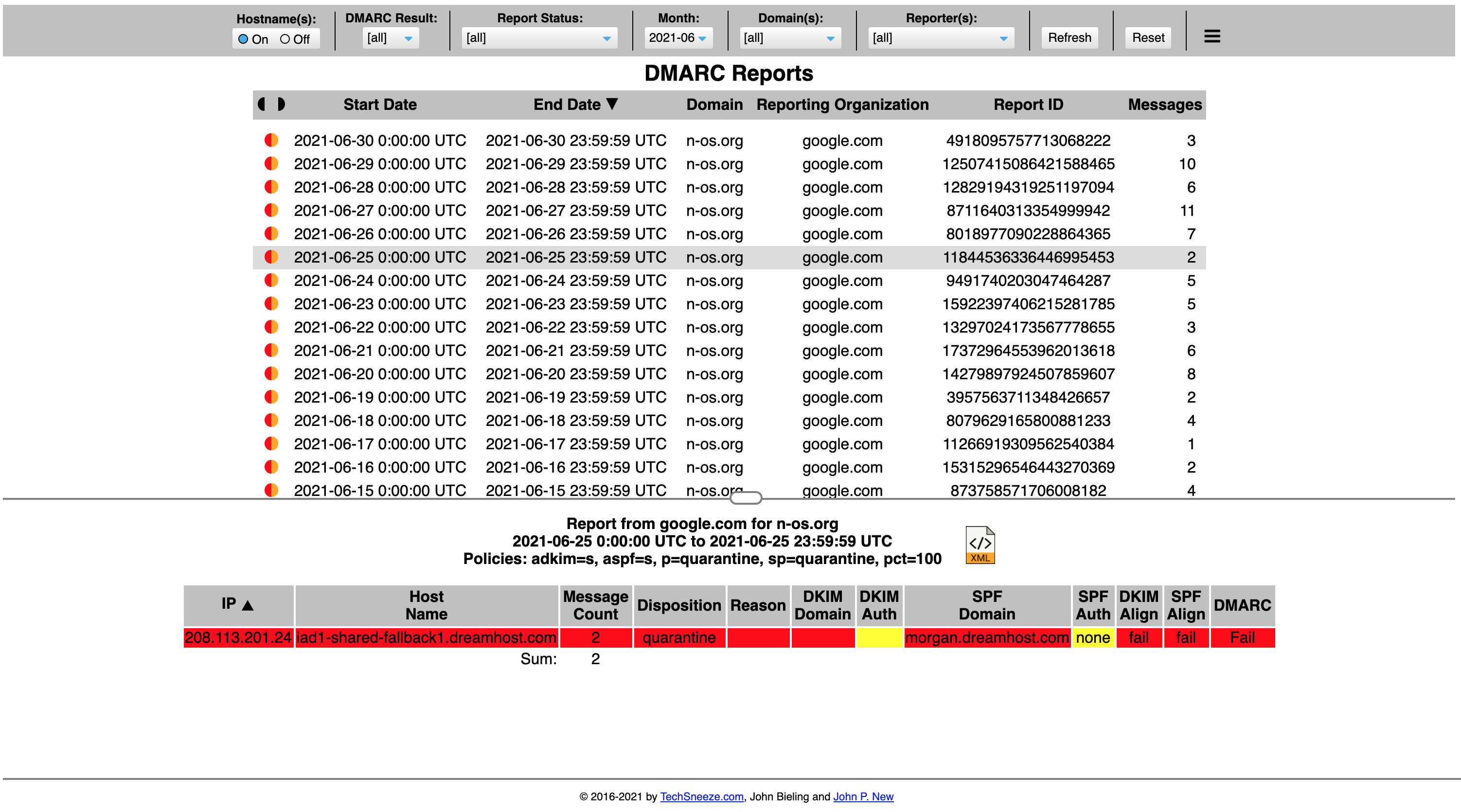
|

|
||||||
|
|
||||||
## Sample docker compose / Environment variables
|
## Sample docker compose / Environment variables
|
||||||
|
The variables should be self-explanatory. Make sure to create the IMAP folders before the cron job runs!
|
||||||
|
|
||||||
Make sure to create the IMAP-Folders for processed and error reports before the cron job runs!
|
**docker-compose.yml**
|
||||||
|
```yaml
|
||||||
|
version: '3.6'
|
||||||
|
|
||||||
The default foldernames are are [`error`](examples/env.example) & [`processed`](examples/env.example) but they can be changed within the [`env-file`](examples/env.example).
|
services:
|
||||||
|
dmarc-report:
|
||||||
|
image: "gutmensch/dmarc-report:latest"
|
||||||
|
hostname: dmarc-report
|
||||||
|
container_name: dmarc-report
|
||||||
|
depends_on:
|
||||||
|
- db
|
||||||
|
ports:
|
||||||
|
- "80:80"
|
||||||
|
environment:
|
||||||
|
- "REPORT_DB_HOST=db"
|
||||||
|
- "REPORT_DB_NAME=dmarc_report"
|
||||||
|
- "REPORT_DB_USER=dmarc_report"
|
||||||
|
- "REPORT_DB_PASS=dbpassword"
|
||||||
|
- "PARSER_IMAP_SERVER=mail"
|
||||||
|
- "PARSER_IMAP_PORT=143"
|
||||||
|
- "PARSER_IMAP_USER=foobar@example.com"
|
||||||
|
- "PARSER_IMAP_PASS=foobar"
|
||||||
|
- "PARSER_IMAP_READ_FOLDER=Inbox"
|
||||||
|
- "PARSER_IMAP_MOVE_FOLDER=processed"
|
||||||
|
- "PARSER_IMAP_MOVE_FOLDER_ERR=error"
|
||||||
|
|
||||||
Make sure to rename the [`env.example`](examples/env.example) file to `.env` and adjust the values to your needs.
|
db:
|
||||||
|
image: mariadb:10
|
||||||
You can find templates for both, [`postgreql`](examples/docker-compose.postgres.yml)
|
environment:
|
||||||
and [`mysql`](examples/docker-compose.mysql.yml)
|
- "MYSQL_ROOT_PASSWORD=dbrootpassword"
|
||||||
db in the [`examples`](examples) directory. Just rename the setup you want to use to `docker-compose.yml`.
|
- "MYSQL_DATABASE=dmarc_report"
|
||||||
|
- "MYSQL_USER=dmarc_report"
|
||||||
|
- "MYSQL_PASSWORD=dbpassword"
|
||||||
|
|
||||||
|
|
||||||
## Manual update
|
|
||||||
|
|
||||||
If you are using the docker-compose file above, you can use this command to trigger an manual update. It will fetch the latest reports and parse them.
|
|
||||||
|
|
||||||
```bash
|
|
||||||
docker compose exec dmarc-report /usr/bin/dmarcts-report-parser.pl -i -d -r=1
|
|
||||||
```
|
```
|
||||||
|
|
||||||
## Optional extended configuration
|
## Optional extended configuration
|
||||||
|
Use SSL instead of default TLS. Set both to 0 to turn off encryption. (not recommended)
|
||||||
|
```yaml
|
||||||
|
- "PARSER_IMAP_SSL=1"
|
||||||
|
- "PARSER_IMAP_TLS=0"
|
||||||
|
```
|
||||||
|
|
||||||
For further optional configuration see the docker-compose [`env-file`](examples/env.example).
|
|
||||||
|
|
||||||
## Contributors
|
|
||||||
|
|
||||||
<img src="./CONTRIBUTORS.svg">
|
|
||||||
|
|
||||||
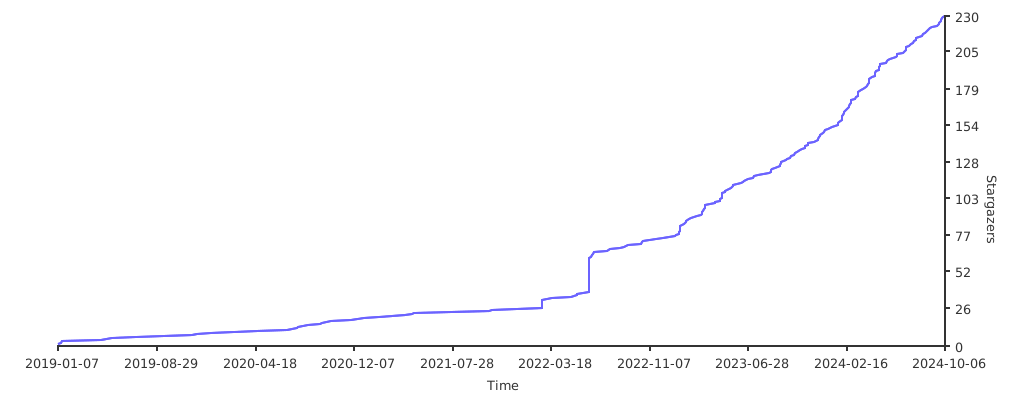
## Stargazers over time
|
|
||||||
|
|
||||||
[](https://starchart.cc/gutmensch/docker-dmarc-report)
|
|
||||||
|
|||||||
@ -1,46 +0,0 @@
|
|||||||
services:
|
|
||||||
dmarc-report:
|
|
||||||
image: "gutmensch/dmarc-report:latest"
|
|
||||||
hostname: dmarc-report
|
|
||||||
container_name: dmarc-report
|
|
||||||
restart: always
|
|
||||||
depends_on:
|
|
||||||
db:
|
|
||||||
condition: service_healthy
|
|
||||||
ports:
|
|
||||||
- "80:80"
|
|
||||||
environment:
|
|
||||||
- "REPORT_DB_HOST=${DB_HOST:-db}"
|
|
||||||
- "REPORT_DB_TYPE=${DB_TYPE:-mysql}"
|
|
||||||
- "REPORT_DB_PORT=${DB_PORT:-3306}"
|
|
||||||
- "REPORT_DB_NAME=${DB_NAME:-dmarc_report}"
|
|
||||||
- "REPORT_DB_USER=${DB_USER:-dmarc_report}"
|
|
||||||
- "REPORT_DB_PASS=${DB_PASSWORD}"
|
|
||||||
- "PARSER_IMAP_SERVER=${IMAP_SERVER}"
|
|
||||||
- "PARSER_IMAP_PORT=${IMAP_PORT:-993}"
|
|
||||||
- "PARSER_IMAP_USER=${IMAP_USER}"
|
|
||||||
- "PARSER_IMAP_PASS=${IMAP_PASSWORD}"
|
|
||||||
- "PARSER_IMAP_READ_FOLDER=${IMAP_READ_FOLDER:-Inbox}"
|
|
||||||
- "PARSER_IMAP_MOVE_FOLDER=${IMAP_MOVE_FOLDER:-processed}"
|
|
||||||
- "PARSER_IMAP_MOVE_FOLDER_ERR=${IMAP_MOVE_FOLDER_ERR:-error}"
|
|
||||||
- "PARSER_IMAP_SSL=${PARSER_IMAP_SSL}"
|
|
||||||
- "PARSER_IMAP_TLS=${PARSER_IMAP_TLS}"
|
|
||||||
- "PARSER_IMAP_IGNORE_ERROR=${PARSER_IMAP_IGNORE_ERROR}"
|
|
||||||
- "PARSER_XML_MAXSIZE=${PARSER_XML_MAXSIZE}"
|
|
||||||
|
|
||||||
db:
|
|
||||||
image: mariadb:10
|
|
||||||
command: --skip-innodb-read-only-compressed
|
|
||||||
restart: always
|
|
||||||
environment:
|
|
||||||
- "MYSQL_ROOT_PASSWORD=${ROOT_DB_PASSWORD}"
|
|
||||||
- "MYSQL_DATABASE=${DB_NAME:-dmarc_report}"
|
|
||||||
- "MYSQL_USER=${DB_USER:-dmarc_report}"
|
|
||||||
- "MYSQL_PASSWORD=${DB_PASSWORD}"
|
|
||||||
volumes:
|
|
||||||
- ./run/db:/var/lib/mysql
|
|
||||||
healthcheck:
|
|
||||||
test: ["CMD", "mysqladmin", "ping", "-h", "localhost", "-uroot", "-p${ROOT_DB_PASSWORD}"]
|
|
||||||
interval: 10s
|
|
||||||
timeout: 10s
|
|
||||||
retries: 5
|
|
||||||
@ -1,44 +0,0 @@
|
|||||||
services:
|
|
||||||
dmarc-report:
|
|
||||||
image: "gutmensch/dmarc-report:latest"
|
|
||||||
hostname: dmarc-report
|
|
||||||
container_name: dmarc-report
|
|
||||||
restart: always
|
|
||||||
depends_on:
|
|
||||||
db:
|
|
||||||
condition: service_healthy
|
|
||||||
ports:
|
|
||||||
- "80:80"
|
|
||||||
environment:
|
|
||||||
- "REPORT_DB_HOST=${DB_HOST:-db}"
|
|
||||||
- "REPORT_DB_TYPE=${DB_TYPE:-pgsql}"
|
|
||||||
- "REPORT_DB_PORT=${DB_PORT:-5432}"
|
|
||||||
- "REPORT_DB_NAME=${DB_NAME:-dmarc_report}"
|
|
||||||
- "REPORT_DB_USER=${DB_USER:-dmarc_report}"
|
|
||||||
- "REPORT_DB_PASS=${DB_PASSWORD}"
|
|
||||||
- "PARSER_IMAP_SERVER=${IMAP_SERVER}"
|
|
||||||
- "PARSER_IMAP_PORT=${IMAP_PORT:-993}"
|
|
||||||
- "PARSER_IMAP_USER=${IMAP_USER}"
|
|
||||||
- "PARSER_IMAP_PASS=${IMAP_PASSWORD}"
|
|
||||||
- "PARSER_IMAP_READ_FOLDER=${IMAP_READ_FOLDER:-Inbox}"
|
|
||||||
- "PARSER_IMAP_MOVE_FOLDER=${IMAP_MOVE_FOLDER:-processed}"
|
|
||||||
- "PARSER_IMAP_MOVE_FOLDER_ERR=${IMAP_MOVE_FOLDER_ERR:-error}"
|
|
||||||
- "PARSER_IMAP_SSL=${PARSER_IMAP_SSL}"
|
|
||||||
- "PARSER_IMAP_TLS=${PARSER_IMAP_TLS}"
|
|
||||||
- "PARSER_IMAP_IGNORE_ERROR=${PARSER_IMAP_IGNORE_ERROR}"
|
|
||||||
- "PARSER_XML_MAXSIZE=${PARSER_XML_MAXSIZE}"
|
|
||||||
|
|
||||||
db:
|
|
||||||
image: postgres:latest
|
|
||||||
restart: always
|
|
||||||
environment:
|
|
||||||
- "POSTGRES_DB=${DB_NAME:-dmarc_report}"
|
|
||||||
- "POSTGRES_USER=${DB_USER:-dmarc_report}"
|
|
||||||
- "POSTGRES_PASSWORD=${DB_PASSWORD}"
|
|
||||||
volumes:
|
|
||||||
- ./run/db:/var/lib/postgresql/data
|
|
||||||
healthcheck:
|
|
||||||
test: ["CMD-SHELL", "pg_isready -U dmarc_report"]
|
|
||||||
interval: 10s
|
|
||||||
timeout: 10s
|
|
||||||
retries: 5
|
|
||||||
@ -1,53 +0,0 @@
|
|||||||
# database host address, leave empty for default host "db"
|
|
||||||
DB_HOST=
|
|
||||||
|
|
||||||
# the database type mysql or pgsql, leave empty for default (depending on your docker-compose.yml)
|
|
||||||
DB_TYPE=
|
|
||||||
|
|
||||||
# the database port (mysql 3306) (pqsql 5432), leave empty for default (depending on your docker-compose.yml)
|
|
||||||
DB_PORT=
|
|
||||||
|
|
||||||
# the database name, leave empty for default "dmarc_report"
|
|
||||||
DB_NAME=
|
|
||||||
|
|
||||||
# the database name, leave empty for default "dmarc_report"
|
|
||||||
DB_USER=
|
|
||||||
|
|
||||||
# mysql root password. Irrelevant if you are using postgres
|
|
||||||
ROOT_DB_PASSWORD=
|
|
||||||
|
|
||||||
# database password for the database user
|
|
||||||
DB_PASSWORD=
|
|
||||||
|
|
||||||
# the email address receiving the DMARC reports
|
|
||||||
IMAP_USER=
|
|
||||||
|
|
||||||
# the password for the email address receiving the DMARC reports
|
|
||||||
IMAP_PASSWORD=
|
|
||||||
|
|
||||||
# the server the email address is hosted on
|
|
||||||
IMAP_SERVER=
|
|
||||||
|
|
||||||
# optional: default is 993 (or 143)
|
|
||||||
IMAP_PORT=
|
|
||||||
|
|
||||||
# optional: default is "Inbox"
|
|
||||||
IMAP_READ_FOLDER=
|
|
||||||
|
|
||||||
# optional: default is "processed"
|
|
||||||
IMAP_MOVE_FOLDER=
|
|
||||||
|
|
||||||
# optional: default is "error"
|
|
||||||
IMAP_MOVE_FOLDER_ERR=
|
|
||||||
|
|
||||||
# Enable SSL and/or (START-)TLS. Set both to 0 to disable encryption (not recommended)
|
|
||||||
PARSER_IMAP_SSL=0
|
|
||||||
PARSER_IMAP_TLS=1
|
|
||||||
|
|
||||||
# Ignore ERROR: message_string() issue experienced with Exchange Online. Set to 1 to enable
|
|
||||||
PARSER_IMAP_IGNORE_ERROR=0
|
|
||||||
|
|
||||||
# Increase the maximum size of the XML file. (default is 50000 bytes)
|
|
||||||
# When the size exceeds the maximum, one could experience an error Uncaught ValueError: DOMDocument::loadXML():
|
|
||||||
# Argument #1 ($source) must not be empty.
|
|
||||||
PARSER_XML_MAXSIZE=50000
|
|
||||||
30
manifest/entrypoint.sh
Executable file → Normal file
30
manifest/entrypoint.sh
Executable file → Normal file
@ -1,17 +1,14 @@
|
|||||||
#!/usr/bin/env bash
|
#!/usr/bin/env bash
|
||||||
|
|
||||||
# change according to alpine and php release
|
|
||||||
PHP_VERSION=81
|
|
||||||
|
|
||||||
# Display PHP error's or not
|
# Display PHP error's or not
|
||||||
if [[ "$ERRORS" != "1" ]] ; then
|
if [[ "$ERRORS" != "1" ]] ; then
|
||||||
sed -i -e "s/error_reporting =.*/error_reporting = E_ALL/g" /etc/php${PHP_VERSION}/php.ini
|
sed -i -e "s/error_reporting =.*=/error_reporting = E_ALL/g" /usr/etc/php.ini
|
||||||
sed -i -e "s/display_errors =.*/display_errors = stdout/g" /etc/php${PHP_VERSION}/php.ini
|
sed -i -e "s/display_errors =.*/display_errors = stdout/g" /usr/etc/php.ini
|
||||||
fi
|
fi
|
||||||
|
|
||||||
# Disable opcache?
|
# Disable opcache?
|
||||||
if [[ -v NO_OPCACHE ]]; then
|
if [[ -v NO_OPCACHE ]]; then
|
||||||
sed -i -e "s/zend_extension=opcache.so/;zend_extension=opcache.so/g" /etc/php${PHP_VERSION}/conf.d/00_opcache.ini
|
sed -i -e "s/zend_extension=opcache.so/;zend_extension=opcache.so/g" /etc/php.d/zend-opcache.ini
|
||||||
fi
|
fi
|
||||||
|
|
||||||
# Tweak nginx to match the workers to cpu's
|
# Tweak nginx to match the workers to cpu's
|
||||||
@ -19,26 +16,9 @@ procs=$(cat /proc/cpuinfo | grep processor | wc -l)
|
|||||||
sed -i -e "s/worker_processes 5/worker_processes $procs/" /etc/nginx/nginx.conf
|
sed -i -e "s/worker_processes 5/worker_processes $procs/" /etc/nginx/nginx.conf
|
||||||
|
|
||||||
# Copy important env vars for PHP-FPM to access
|
# Copy important env vars for PHP-FPM to access
|
||||||
PHP_ENV_FILE="/etc/php${PHP_VERSION}/php-fpm.d/${PHP_ENV_FILE:-env.conf}"
|
PHP_ENV_FILE="/usr/etc/php-fpm.d/${PHP_ENV_FILE:-env.conf}"
|
||||||
echo '[www]' > "$PHP_ENV_FILE"
|
echo '[www]' > "$PHP_ENV_FILE"
|
||||||
echo 'user = nginx' >> "$PHP_ENV_FILE"
|
env | grep -e 'REPORT_DB_HOST' -e 'REPORT_DB_NAME' -e 'REPORT_DB_USER' -e 'REPORT_DB_PASS' | sed "s/\(.*\)=\(.*\)/env[\1]='\2'/" >> "$PHP_ENV_FILE"
|
||||||
echo 'group = www-data' >> "$PHP_ENV_FILE"
|
|
||||||
echo 'listen.owner = nginx' >> "$PHP_ENV_FILE"
|
|
||||||
echo 'listen.group = www-data' >> "$PHP_ENV_FILE"
|
|
||||||
env | grep -e 'REPORT_DB_TYPE' -e 'REPORT_DB_HOST' -e 'REPORT_DB_PORT' -e 'REPORT_DB_NAME' -e 'REPORT_DB_USER' -e 'REPORT_DB_PASS' | sed "s/\(.*\)=\(.*\)/env[\1] = '\2'/" >> "$PHP_ENV_FILE"
|
|
||||||
|
|
||||||
# compat from older image where variable was not existing
|
|
||||||
grep -e ^REPORT_DB_PORT "$PHP_ENV_FILE" || echo env[REPORT_DB_PORT] = 3306 >> "$PHP_ENV_FILE"
|
|
||||||
|
|
||||||
# Get and parse dmarc reports once at startup to avoid PHP errors with a new database
|
|
||||||
if /usr/bin/dmarcts-report-parser.pl -i -d -r > /var/log/nginx/dmarc-reports.log 2>&1; then
|
|
||||||
echo 'INFO: Dmarc reports parsed successfully'
|
|
||||||
else
|
|
||||||
echo 'CRIT: Dmarc reports could not be parsed. Check your IMAP and MYSQL Settings.'
|
|
||||||
echo -e "DEBUG: Parsing failed with the following output:\n"
|
|
||||||
cat /var/log/nginx/dmarc-reports.log
|
|
||||||
exit 1
|
|
||||||
fi
|
|
||||||
|
|
||||||
# Start supervisord and services
|
# Start supervisord and services
|
||||||
/usr/bin/supervisord -n -c /etc/supervisord.conf
|
/usr/bin/supervisord -n -c /etc/supervisord.conf
|
||||||
|
|||||||
@ -5,15 +5,13 @@
|
|||||||
# If IMAP access is not used, config options starting with $imap do not need to
|
# If IMAP access is not used, config options starting with $imap do not need to
|
||||||
# be set and are ignored.
|
# be set and are ignored.
|
||||||
|
|
||||||
$debug = $ENV{'PARSER_DEBUG'} // 0;
|
$debug = 0;
|
||||||
$delete_reports = $ENV{'PARSER_DELETE_REPORTS'} // 0;
|
$delete_reports = 0;
|
||||||
|
|
||||||
$dbname = $ENV{'REPORT_DB_NAME'};
|
$dbname = $ENV{'REPORT_DB_NAME'};
|
||||||
$dbuser = $ENV{'REPORT_DB_USER'};
|
$dbuser = $ENV{'REPORT_DB_USER'};
|
||||||
$dbpass = $ENV{'REPORT_DB_PASS'};
|
$dbpass = $ENV{'REPORT_DB_PASS'};
|
||||||
$dbhost = $ENV{'REPORT_DB_HOST'}; # Set the hostname if we can't connect to the local socket.
|
$dbhost = $ENV{'REPORT_DB_HOST'}; # Set the hostname if we can't connect to the local socket.
|
||||||
$dbport = $ENV{'REPORT_DB_PORT'} // 3306;
|
|
||||||
$dbtype = $ENV{'REPORT_DB_TYPE'} eq 'pgsql' ? 'Pg' : 'mysql';
|
|
||||||
|
|
||||||
if(exists $ENV{PARSER_IMAP_SERVER_WITH_PORT} && defined $ENV{PARSER_IMAP_SERVER_WITH_PORT}) {
|
if(exists $ENV{PARSER_IMAP_SERVER_WITH_PORT} && defined $ENV{PARSER_IMAP_SERVER_WITH_PORT}) {
|
||||||
my @server_attr = split ':', $ENV{PARSER_IMAP_SERVER_WITH_PORT};
|
my @server_attr = split ':', $ENV{PARSER_IMAP_SERVER_WITH_PORT};
|
||||||
@ -29,7 +27,7 @@ $imappass = $ENV{'PARSER_IMAP_PASS'};
|
|||||||
$imapssl = $ENV{'PARSER_IMAP_SSL'} // '0'; # If set to 1, remember to change server port to 993 and disable imaptls.
|
$imapssl = $ENV{'PARSER_IMAP_SSL'} // '0'; # If set to 1, remember to change server port to 993 and disable imaptls.
|
||||||
$imaptls = $ENV{'PARSER_IMAP_TLS'} // '1'; # Enabled as the default and best-practice.
|
$imaptls = $ENV{'PARSER_IMAP_TLS'} // '1'; # Enabled as the default and best-practice.
|
||||||
$tlsverify = $ENV{'PARSER_IMAP_VERIFY'} // '0'; # Enable verify server cert as the default and best-practice.
|
$tlsverify = $ENV{'PARSER_IMAP_VERIFY'} // '0'; # Enable verify server cert as the default and best-practice.
|
||||||
$imapignoreerror = $ENV{'PARSER_IMAP_IGNORE_ERROR'} // '0';# set it to 1 if you see an "ERROR: message_string()
|
$imapignoreerror = 0; # set it to 1 if you see an "ERROR: message_string()
|
||||||
# expected 119613 bytes but received 81873 you may
|
# expected 119613 bytes but received 81873 you may
|
||||||
# need the IgnoreSizeErrors option" because of malfunction
|
# need the IgnoreSizeErrors option" because of malfunction
|
||||||
# imap server as MS Exchange 2007, ...
|
# imap server as MS Exchange 2007, ...
|
||||||
@ -41,12 +39,12 @@ $imapmovefolder = $ENV{'PARSER_IMAP_MOVE_FOLDER'};
|
|||||||
$imapmovefoldererr = $ENV{'PARSER_IMAP_MOVE_FOLDER_ERR'};
|
$imapmovefoldererr = $ENV{'PARSER_IMAP_MOVE_FOLDER_ERR'};
|
||||||
|
|
||||||
# maximum size of XML files to store in database, long files can cause transaction aborts
|
# maximum size of XML files to store in database, long files can cause transaction aborts
|
||||||
$maxsize_xml = $ENV{'PARSER_XML_MAXSIZE'} // 50000;
|
$maxsize_xml = 50000;
|
||||||
# store XML as base64 encopded gzip in database (save space, harder usable)
|
# store XML as base64 encopded gzip in database (save space, harder usable)
|
||||||
$compress_xml = $ENV{'PARSER_XML_COMPRESS'} // 0;
|
$compress_xml = 0;
|
||||||
|
|
||||||
# if there was an error during file processing (message does not contain XML or ZIP parts,
|
# if there was an error during file processing (message does not contain XML or ZIP parts,
|
||||||
# or a database error) the parser reports an error and does not delete the file, even if
|
# or a database error) the parser reports an error and does not delete the file, even if
|
||||||
# delete_reports is set (or --delete is given). Deletion can be enforced by delete_failed,
|
# delete_reports is set (or --delete is given). Deletion can be enforced by delete_failed,
|
||||||
# however not for database errors.
|
# however not for database errors.
|
||||||
$delete_failed = $ENV{'PARSER_DELETE_FAILED'} // 0;
|
$delete_failed = 0;
|
||||||
|
|||||||
@ -4,12 +4,11 @@
|
|||||||
// ### configuration ##################################################
|
// ### configuration ##################################################
|
||||||
// ####################################################################
|
// ####################################################################
|
||||||
|
|
||||||
$dbtype=getenv('REPORT_DB_TYPE');
|
|
||||||
$dbhost=getenv('REPORT_DB_HOST');
|
$dbhost=getenv('REPORT_DB_HOST');
|
||||||
$dbport=getenv('REPORT_DB_PORT');
|
|
||||||
$dbname=getenv('REPORT_DB_NAME');
|
$dbname=getenv('REPORT_DB_NAME');
|
||||||
$dbuser=getenv('REPORT_DB_USER');
|
$dbuser=getenv('REPORT_DB_USER');
|
||||||
$dbpass=getenv('REPORT_DB_PASS');
|
$dbpass=getenv('REPORT_DB_PASS');
|
||||||
|
$dbport='3306';
|
||||||
|
|
||||||
$cssfile="default.css";
|
$cssfile="default.css";
|
||||||
|
|
||||||
|
|||||||
BIN
screenshot.png
BIN
screenshot.png

Binary file not shown.
|
Before Width: | Height: | Size: 568 KiB After Width: | Height: | Size: 571 KiB |
Loading…
x
Reference in New Issue
Block a user