## Summary
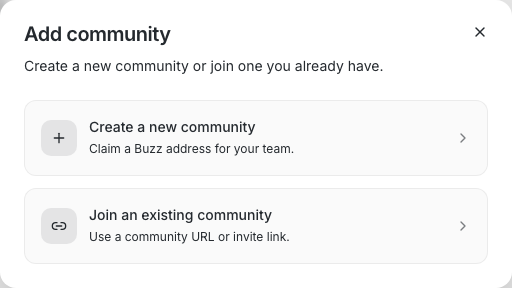
- align the multi-community rail with the content surface and balance
its visible 10px side gutters
- center Mobile pairing, start sessions on demand, and keep retry states
inside the QR area
- reveal the QR code and copy action with 250ms motion and use the
standard loading spinner

The rail was centered within its own box, but the adjacent sidebar added
another 11px to the visible right gap. Mobile pairing also started
before user intent, which could leave an idle session waiting for EOSE.

## Validation
- `pnpm -C desktop build:e2e`
- `pnpm -C desktop test` — 3,516 passed
- `pnpm -C desktop exec playwright test tests/e2e/community-rail.spec.ts
--project=smoke` — 19 passed
- `pnpm -C desktop exec playwright test
tests/e2e/mobile-pairing-qr.spec.ts --project=smoke` — 1 passed

`pnpm -C desktop check` is currently blocked by the existing
`src-tauri/src/managed_agents/runtime.rs` file-size baseline (2,220
lines; limit 2,216).
## Summary

- retire Virtua prepend reconciliation on every ordinary reader wheel
event, including events suppressed from its separate wheel-timing
heuristic
- keep Ctrl+wheel browser zoom excluded from reader ownership
- arm the Ctrl+wheel prepend probe before pagination begins so it cannot
miss the commit
- preserve ESM/CJS patch parity and update the patch lock hash

## Why main was red

PR #2855 added the reader-wheel retirement action after Virtua's
existing suppression guard. Once the first event set that guard, later
events in the same wheel burst returned before retiring prepend mode. A
late ResizeObserver correction could then pull the viewport backward by
20–40px. The same test had failed twice on #2855 but passed its final
retry, so the PR job appeared green; the merge commit lost all three
retries.

The separate Ctrl+wheel failure was a test race: its MutationObserver
was registered after the request had already been triggered and could
miss the prepend commit.

## Validation

- desktop full unit suite: 3,515 passed
- pre-push desktop check: passed
- `git diff --check`: passed
- CI is the E2E verification; no local E2E was run

Fixes the main-branch failure in CI run 30180099007.

Signed-off-by: Wes <wesbillman@users.noreply.github.com>
Co-authored-by: Carl <c7ebe626f000404285d3686e1dc74cc07cc60a9754a150041ba132e14bd3e2ec@buzz.block.builderlab.xyz>
## Summary

- make Virtua the sole prepend geometry/correction owner by accumulating
active prepend ResizeObserver corrections from the live DOM offset
- retire prepend reconciliation on ordinary reader wheel input, while
preserving it for Ctrl+wheel browser zoom
- remove Buzz's competing three-second semantic-anchor watcher and
corrective `scrollBy` loop
- keep ESM/CJS Virtua patch behavior equivalent and update the patch
lock hash

## Why

Buzz admitted prepended rows using seeded estimates, then Virtua
received multiple measurement corrections for the same transaction. Each
correction was based on the same stale model offset, so a later write
replaced an earlier correction instead of accumulating it. In the
reproduced first page, that resurrected 452px of anchor drift; the
app-level watcher merely corrected the lost virtualizer write afterward.

This fixes the correction inside Virtua and deletes the competing app
writer, following the single-owner geometry invariant used by Berd
rather than copying its spacer implementation.

## Validation

- watcher-off desktop virtualization matrix: 11/11 passed, including 15
cascading prepends, continued wheel input, detached rich-row growth,
channel switching, bottom follow, and buffered live arrivals
- focused cascading prepend/Ctrl+wheel regression passed
- desktop typecheck passed
- desktop unit suite passed: 3,495 tests
- Biome passed on changed desktop files
- `git diff --check` clean

## Manual behavior

Load older history repeatedly while scrolling upward, then wheel
downward during/after a prepend. The visible anchor should stay within
the existing 5px contract during reconciliation, and deliberate reader
movement should not be pulled back. Ctrl+wheel during the prepend commit
must not cancel reconciliation.

---------

Signed-off-by: Wes <wesbillman@users.noreply.github.com>
Co-authored-by: Carl <c7ebe626f000404285d3686e1dc74cc07cc60a9754a150041ba132e14bd3e2ec@sprout-oss.stage.blox.sqprod.co>
Co-authored-by: Carl <c7ebe626f000404285d3686e1dc74cc07cc60a9754a150041ba132e14bd3e2ec@buzz.block.builderlab.xyz>
## Summary
- render mobile pairing QR codes locally with Wallet-inspired styling
- hide the raw pairing URI behind a matching copy button
- add focused rendering and dialog coverage

## Test plan
- desktop lint and 3,489 desktop tests
- focused pairing dialog Playwright test
- decoded the rendered QR back to the exact pairing URI
## Summary

- Replace all references to a specific corporate VPN product name with
generic "VPN" / "corporate VPN" / "VPN tunnel" / "VPN CLI" language
across 15 files (21 lines)
- Comment-only and doc-only changes — zero functional impact
- Keeps the OSS repo free of vendor-specific assumptions

`rg -i warp` returns zero hits after this change (excluding
`node_modules`, lockfiles).
## Why

Installing the Codex, Claude, or Goose desktop app does not install the
command-line harness Buzz needs. The current UI makes that distinction
unclear, links some missing-CLI states to adapter documentation, and can
report a successful install from the installer exit code even when
runtime discovery still fails. On Windows, Buzz also invokes Goose's
Bash installer, which writes the executable somewhere Buzz does not
discover.

## What

- distinguish missing vendor CLIs from missing or outdated ACP adapters
in runtime metadata and UI guidance
- link Codex, Claude Code, and Goose missing-CLI states to their
official CLI installation documentation
- explain in Settings, onboarding, and agent configuration that the
desktop app alone is not sufficient
- use Goose's official PowerShell installer on Windows
- refresh PATH and rediscover the requested runtime after installation,
keeping the control retryable if the runtime is still unavailable
- add Rust and Playwright regression coverage for Windows installer
selection, CLI/adapter guidance, false-success prevention, verified
installs, and onboarding copy

## Risk Assessment

Medium. This changes desktop onboarding and runtime installation
behavior. Successful installs now require the runtime catalog to verify
availability; previously hidden discovery failures will surface as
actionable errors instead of a false success state.

## References

- [Codex CLI installation](https://developers.openai.com/codex/cli/)
- [Claude Code
installation](https://code.claude.com/docs/en/getting-started)
- [Goose
installation](https://goose-docs.ai/docs/getting-started/installation/)
- Follow-up to #2563 and #2587

## Validation

- `just desktop-typecheck`
- `just desktop-test` — 3,455 passed
- focused Rust post-install verification tests
- focused Playwright Doctor/onboarding coverage (in progress; CI and
local sequential rerun will provide final results)

Generated with Codex

---------

Signed-off-by: Atish Patel <atish@squareup.com>
Co-authored-by: Codex <noreply@openai.com>
Co-authored-by: Goose <opensource@block.xyz>
## Summary

- Preserve plain-string errors returned by Tauri and show an actionable
message when huddle audio is unavailable in the relay deployment.
- Use one error formatter across channel, timeline, wave, and profile
huddle actions while preserving other relay and device errors.
- Complete the huddle lifecycle when audio setup fails after publishing
a start event, preventing peers and reloaded clients from reconstructing
a phantom active huddle.
- Cover unavailable-audio formatting and START → rollback-END
reconstruction with regression tests.

## Behavior

The Tauri huddle commands reject with a plain string. Several desktop
toast call sites only preserved JavaScript `Error` objects, so the relay
message was discarded and replaced with “Failed to join huddle.”

The desktop now recognizes `huddle_audio_unavailable` and the current
relay message, then shows:

> Huddle audio isn’t available on this server. Ask an administrator to
turn it on.

Other relay and device messages remain intact, including microphone
errors.

`start_huddle` also publishes `KIND_HUDDLE_STARTED` before audio setup.
If setup fails, rollback now publishes `KIND_HUDDLE_ENDED` through the
normal end-and-archive path before resetting local state. This makes the
failed start observable to lifecycle reconstruction and prevents stale
join affordances.

## Checks

- `cd desktop && pnpm test` — 3,405 passed
- `cd desktop/src-tauri && cargo test` — 1,560 passed, 13 ignored; 3
diagnostic tests passed
- `cd desktop && pnpm exec playwright test tests/e2e/channels.spec.ts
--project=smoke --grep 'huddle rollback end event'` — passed
- `just desktop-tauri-check`
- `cd desktop && pnpm typecheck`
- `cd desktop && pnpm check`
- Pre-commit and pre-push hooks